Black Tie Dress Code: The Ultimate Guide
Black tie stands as one of the most recognizable dress codes in formal occasions, yet many guests arrive uncertain about what the standard truly requires. This guide breaks down every element of black tie attire for men and women, separating essential rules from acceptable variations.
The dress code sits just below white tie in formality, serving as the baseline for galas, formal weddings, award ceremonies, and upscale evening events. Understanding its requirements helps guests navigate invitations with confidence while respecting the host’s expectations.
Whether you are preparing for your first formal gala or need a refresher before a high-profile wedding, the details below cover everything from the foundational tuxedo ensemble to modern creative interpretations that still honor the tradition.
What Is Black Tie Dress Code?
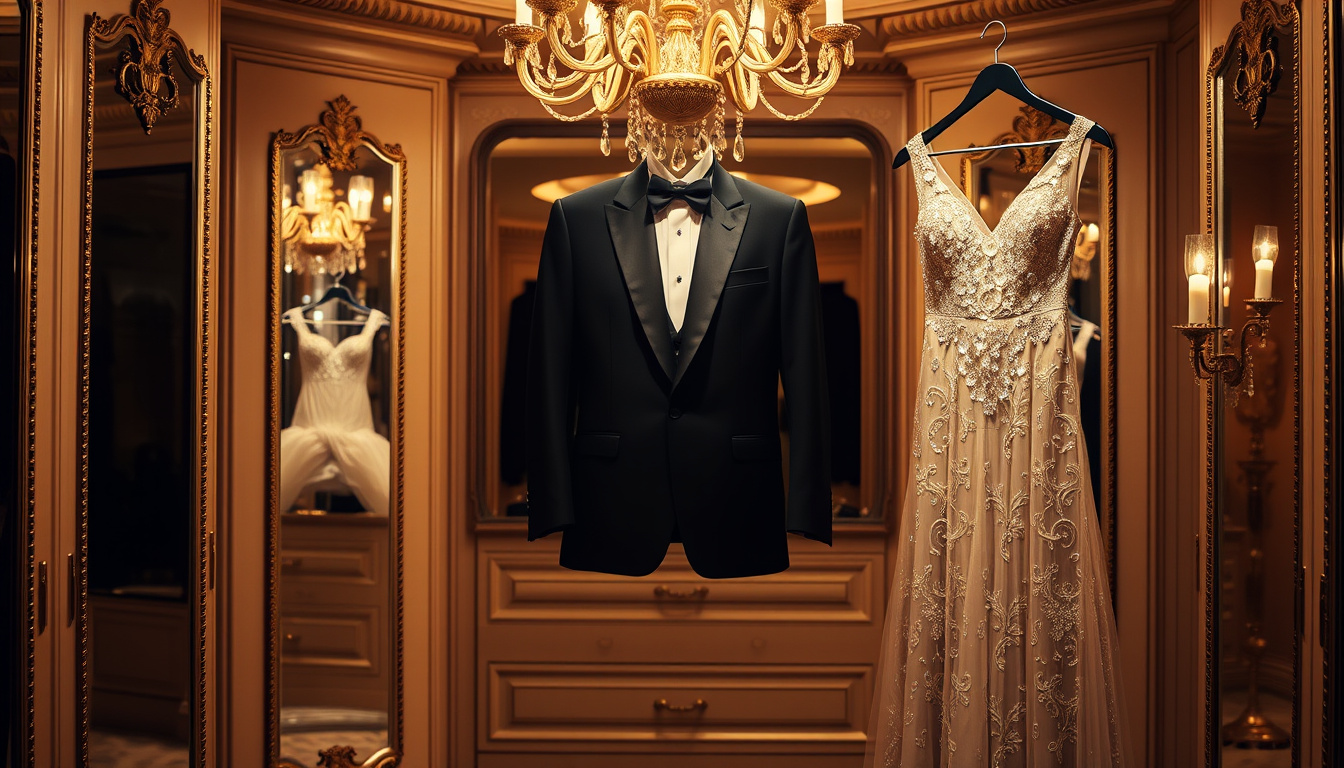
Black tie is an evening semi-formal dress code that originated in the 19th century as standard men’s evening wear. It requires a tuxedo, also known as a dinner jacket, paired with formal accessories. The ensemble centers on a black tuxedo jacket, white shirt, and black bow tie, distinguishing itself from daytime suits through its precision in fit, fabric, and satin accents. You can find more about the origins of this dress code at Gentleman’s Gazette.
The dress code demands attention to detail that ordinary suits do not require. Satin lapels, jetted pockets, and specific shirt constructions all signal that an outfit belongs to the black tie tradition rather than simply looking formal. According to Generation Tux, the distinction between a suit and a tuxedo lies in these satin details and the overall construction of the garment.
Black Tie at a Glance
Tuxedo with satin lapels, bow tie, patent leather shoes
Floor-length gown or formal cocktail dress, elegant heels
Evening events only, typically after 6 PM
Semi-formal, second only to white tie
Key Facts About Black Tie
- Black tie ranks just below white tie in formal hierarchy, representing the highest tier of semi-formal attire
- A tuxedo is not a suit—the satin lapels, jetted pockets, and formal construction define the difference
- Floor-length gowns are the preferred choice for women, though elegant cocktail dresses may work at lenient events
- The dress code applies exclusively to evening events; daytime equivalents include morning dress or lounge suits
- Modern variations labeled “black tie optional” offer flexibility while still encouraging formal wear
- The tradition emerged in the 19th century and standardized after the 1880s, according to Gentleman’s Gazette
| Element | Men | Women |
|---|---|---|
| Outer Garment | Tuxedo dinner jacket with satin lapels | Floor-length gown or formal cocktail dress |
| Neckwear | Self-tied black bow tie | Optional clutch or statement jewelry |
| Shirt | White tuxedo shirt with studs or black buttons | Coordinated with dress; elegant fabrics |
| Footwear | Black patent leather Oxfords or pumps | Elegant heels or dressy flats |
| Waist | Cummerbund or waistcoat; no belt | Dress with defined waist or fitted silhouette |
| Accessories | Cufflinks, pocket square, studs | Minimal jewelry, evening clutch |
Black tie is strictly an evening dress code. Invitations specifying black tie for daytime events may indicate “black tie optional” or suggest a misinterpretation. For daytime formal occasions, morning dress or lighter suits remain the appropriate choice.
Black Tie Attire for Men
A proper black-tie ensemble for men follows a precise formula. Every component must work together to create a cohesive formal look. The foundation rests on five essential pieces: the dinner jacket, matching trousers, a formal shirt, neckwear, and appropriate footwear.
The Dinner Jacket
The dinner jacket forms the centerpiece of any black tie outfit. Available in single- or double-breasted configurations, it features peak, shawl, or notched lapels crafted from satin or grosgrain silk. Satin details extend to buttons and pockets, while the lower pockets remain jetted with no flaps. The breast pocket holds a welt rather than a standard patch pocket. According to Art of Manliness, these details collectively distinguish the dinner jacket from ordinary formal wear.
Color options typically include classic black or midnight blue. Both are considered appropriate, though black remains the more traditional choice. The fabric should be wool or a wool blend suitable for evening wear.
Trousers
Tuxedo trousers must match the dinner jacket in fabric and color. The defining feature is a satin braid running down the outer seams—a detail that immediately signals formal evening wear. Trousers sit high-waisted and fit closely without a belt. Instead, side adjusters or suspenders (braces) provide the proper fit. The absence of belt loops maintains the smooth, unbroken line that black tie demands.
The Formal Shirt
The tuxedo shirt differs significantly from standard dress shirts. It features a pleated or textured front panel known as the bib, which provides visual interest against the jacket. Rather than regular buttons, the shirt uses studs or black buttons positioned along the bib. French cuffs require cufflinks for closure, adding a refined detail. The collar options include wingtip (classic) or spread collar styles.
Neckwear
The black bow tie must be self-tied—never pre-tied. The material should match the lapel facing, typically satin. Two main bow tie shapes exist: the straight-end or batwing style suits thinner necks, while the pointed style complements angular facial features. A regular necktie never substitutes for a bow tie in true black tie settings.
Footwear
Shoes complete the look with polished black patent leather Oxfords or pumps. The patent leather finish adds the necessary formality, and the shoe style should remain classic. Other leather types, even if polished, fall short of black tie standards.
Even the finest tuxedo loses impact without proper fit. Structured shoulders and a tailored waist transform an outfit. Sources at Generation Tux emphasize that impeccable fit and uniform matching of all elements create the polished appearance black tie requires.
Essential Accessories for Men
- Cufflinks for French cuffs on the tuxedo shirt
- White linen pocket square folded in the breast pocket
- Cummerbund or waistcoat to cover suspenders; color should match the bow tie
- Shirt studs for the bib front
- For winter events, a long wool or cashmere overcoat in black, midnight blue, or charcoal
Black Tie Attire for Women
Women attending black tie events traditionally wear a floor-length evening gown or a formal cocktail dress in elegant fabrics. The goal is sophistication that complements rather than competes with the men’s tuxedos. According to Beau Ties Blog, women’s attire should emphasize elegance through refined fabrics, classic silhouettes, and understated accessories.
The Evening Gown
Floor-length gowns represent the most traditional and safest choice for black tie events. Fabrics such as silk, chiffon, velvet, or structured satin convey the formality the occasion demands. The silhouette should be refined—either form-fitting or ballgown style—allowing movement while maintaining elegance.
Cocktail Dress Alternatives
At events described as flexible or where “black tie” appears alongside other descriptors, a sophisticated cocktail dress may suffice. The key is choosing a dress that reads as truly formal rather than business or casual. Elegant fabrics, a polished hemline, and refined accessories elevate the look to black tie appropriate.
Color Considerations
Classic black remains a perennial choice for its timeless elegance. Other colors work well when selected thoughtfully. Jewel tones, metallic shades, and deep hues project sophistication while allowing personal expression. White and ivory carry associations with certain occasions and should be considered in context.
While the traditional guideline discourages trousers for women at formal black tie events, contemporary interpretations have become more inclusive. A well-tailored formal jumpsuit or elegant wide-leg trousers in luxurious fabric may work at creative or modern events. When in doubt, the floor-length gown remains the safest and most universally accepted choice.
Footwear and Accessories
- Elegant heels in a height appropriate for extended wear
- Minimal, refined jewelry that catches light without overwhelming
- An evening clutch for essentials
- Hair and makeup polished to match the formality of the occasion
What Is Black Tie Optional?
Black tie optional appears on invitations when hosts wish to accommodate guests who may not own or wish to rent a tuxedo. This phrasing grants permission to wear a well-tailored dark suit with formal accessories instead of a full tuxedo. The Gentleman’s Gazette notes that this flexibility acknowledges modern realities while preserving the spirit of formal evening dress.
Interpreting the Invitation
When an invitation specifies black tie optional, guests face a genuine choice. Those who own formal wear will typically opt for a tuxedo, while others may choose a dark suit with a conservative tie. The key distinction lies in the accessories—polished shoes, a quality dress shirt, and careful attention to fit remain essential regardless of whether a full tuxedo is worn.
Black Tie at Weddings
Weddings frequently specify black tie as their dress code, expecting male guests to wear tuxedos. The Art of Manliness notes that groomsmen in tuxedos appearing at daytime wedding photo sessions technically violate the evening-only nature of black tie. The dress code should be reserved for the actual evening celebration and corresponding photographs.
Creative Black Tie Interpretations
Some invitations welcome creative interpretations while maintaining core black tie elements. This might include textured fabrics, subtle modern colors, or contemporary shirt designs. The emphasis remains on “style over fashion”—prioritizing classic elegance over trendy interpretations that might undercut the formality.
Budget-Friendly Options
Renting a tuxedo makes black tie accessible for occasional events. Sources at Generation Tux recommend prioritizing professional tailoring over purchasing new. A rented tuxedo that fits properly will always outperform an owned tuxedo that fits poorly.
Modern black tie guidance acknowledges that fit varies across body types. Bow tie shapes, for instance, can flatter different face shapes—wider faces may suit larger bow ties, while slimmer faces might pair well with smaller, more proportional styles. These subtle adaptations help guests achieve a polished appearance tailored to their individual proportions. Here’s a comprehensive guide to the black-tie dress code for men and women, covering essential rules and acceptable variations, at Premi al millor actor dels premis de l’Acadèmia.
Black Tie Dos and Don’ts
Understanding the boundaries of black tie dress code prevents common missteps. These guidelines distinguish confident dressers from those who accidentally violate the standard.
Essential Do’s
- Ensure impeccable fit throughout the entire ensemble—structured shoulders and a tailored waist make the difference
- Match all elements uniformly, from lapels to trousers to accessories
- Reserve black tie strictly for evening events, typically beginning after 6 PM
- Keep accessories refined and understated—black tie values subtlety over ostentation
- Self-tie your bow tie rather than wearing a pre-tied version
Critical Don’ts
- Never wear a regular suit without satin details unless the event explicitly permits “black tie optional”
- Avoid belts entirely—they disrupt the sleek line and are prohibited in favor of suspenders or cummerbunds
- Refrain from wearing black tie during daytime hours; morning dress or lounge suits serve as daytime alternatives
- Do not substitute a regular necktie for the required black bow tie
- Avoid flashy colors, patterns, or overly casual fabrics that undermine formality
If an invitation creates genuine uncertainty about dress code expectations, reaching out to the host or event organizer remains the most considerate approach. Asking politely demonstrates respect for the occasion rather than ignorance of etiquette.
White Tie Versus Black Tie
Understanding where black tie sits relative to white tie helps contextualize its requirements. White tie represents the highest formal tier in Western dress codes, while black tie occupies the second tier as semi-formal evening wear.
White tie demands a tailcoat, white waistcoat, starched shirt, and white bow tie. The Gentleman’s Gazette describes white tie as black tie’s “bigger brother”—more rigid and permitting no substitutions. Typical occasions include royal events, state dinners, and ultra-formal galas.
Black tie, by contrast, permits more flexibility while maintaining formal standards. Dinner jackets replace tailcoats, black bow ties replace white ones, and cummerbunds or waistcoats cover the waist. This reduced rigidity makes black tie more accessible for a broader range of events while preserving ceremonial elegance.
Comparison Overview
| Aspect | White Tie | Black Tie |
|---|---|---|
| Formality | Strictest formal level | Evening semi-formal |
| Key Garments | Tailcoat, white waistcoat, starched shirt | Dinner jacket, black bow tie, cummerbund |
| Occasions | Royal balls, state dinners | Galas, formal weddings, premieres |
| Flexibility | None—strictly prescribed | Some modern variations permitted |
The History of Black Tie
The black tie tradition emerged in the 19th century as a response to changing social customs around evening entertainment. Prior to its standardization, formal evening dress varied considerably. The introduction of the tuxedo—a shortened dinner jacket variant—provided a more relaxed yet still formal option for semi-formal evening occasions.
The term “tuxedo” itself derives from Tuxedo Park, New York, where the jacket gained popularity among social elites in the late 1800s. By the 1880s, the ensemble had standardized into the recognizable format that persists today. The black jacket, white shirt, and black bow tie became shorthand for formal evening social occasions across English-speaking nations.
Throughout the 20th century, black tie evolved while retaining its core elements. Post-World War II saw increased standardization, while the late 20th and early 21st centuries introduced subtle modern variations—contemporary shirt designs, alternative fabrics, and more inclusive sizing—without abandoning the essential character of the dress code.
- Late 1800s: The tuxedo jacket emerges in England as a less formal alternative to tailcoats for dinner parties
- 1880s: Standardization begins, with the black jacket, white shirt, and black bow tie becoming the recognized formula
- Early 1900s: Hollywood glamour elevates black tie to cultural prominence as a symbol of elegance
- Post-WWII: Black tie becomes the default formal dress code for a wide range of social occasions
- 1980s–1990s: Increased attention to precise etiquette reinforces traditional rules
- 2000s–Present: Modern variations emerge while maintaining core traditions; “black tie optional” language becomes common
Established Facts and Remaining Questions
Several aspects of black tie dress code remain firmly established through consistent historical usage and contemporary practice. Other elements, however, continue to evolve or vary depending on specific contexts and individual interpretations.
| Established Information | Evolving or Context-Dependent |
|---|---|
| Tuxedo with satin lapels required for men | Acceptability of jumpsuits or tailored pantsuits for women |
| Self-tied black bow tie mandatory | Modern creative variations at themed or contemporary events |
| Patent leather shoes for men | Strictness of enforcement varies by venue and host |
| Evening-only application | Inclusive sizing and body type adaptations |
| Floor-length preferred for women | Regional or cultural variations in interpretation |
Why Black Tie Dress Code Matters
Dress codes exist to create a shared visual language that elevates occasions beyond ordinary social gatherings. Black tie specifically signals formality, respect for the host, and participation in traditions that span generations. When guests adhere to the dress code, they contribute to an atmosphere of elegance and occasion.
Beyond the surface appearance, understanding black tie reflects broader cultural literacy. The vocabulary of formal dress—tuxedo, dinner jacket, cummerbund, wingtip collar—connects contemporary practice to historical precedent. This knowledge proves valuable across professional networking, celebratory events, and cultural participation.
For those preparing for formal events, taking the dress code seriously demonstrates consideration for both the occasion and fellow guests. The effort involved in securing proper attire, ensuring proper fit, and understanding the nuances of the code reflects attention to detail that carries over into other domains.
Style Expert Perspectives
Fashion authorities consistently emphasize that black tie rewards attention to detail. Art of Manliness stresses that the precision distinguishing a tuxedo from a suit—satin lapels, jetted pockets, specific shirt construction—exists precisely because black tie demands differentiation from ordinary formal wear.
Etiquette authorities maintain that the spirit of black tie prioritizes understated elegance over ostentatious display. The Gentleman’s Gazette recommends focusing on quality fit over quantity of accessories, noting that restraint characterizes genuinely sophisticated dress.
The essence of black tie lies not in any single element but in the cohesive effect of attention to detail, proper fit, and restrained elegance.
Preparing for a Black Tie Event
Success with black tie begins well before the event date. For men, this means securing a properly fitted tuxedo or arranging a rental with sufficient time for alterations. For women, it involves selecting an appropriate gown and arranging any necessary alterations or accessories.
Both genders benefit from reviewing the specific invitation language. Terms like “black tie,” “black tie optional,” “creative black tie,” or “formal” each carry distinct implications that guide wardrobe choices. When uncertain, erring on the side of greater formality demonstrates respect for the occasion.
Final preparations should include pressing or steaming garments, polishing shoes, and confirming that all accessories are present and in good condition. For more guidance on formal wear selection, exploring resources from established retailers and etiquette authorities helps ensure nothing is overlooked.
Those seeking additional context about formal dress codes and their applications might find value in consulting comprehensive guides. For example, research into retail environments and fashion resources—such as the Old Navy Thunder Bay Store—demonstrates how formal and casual dress expectations continue to evolve across different contexts.
Similarly, understanding how different venues approach dress codes—such as directories covering major shopping and event centers—can provide practical insights. The Montreal Eaton Centre Directory offers examples of how different establishments communicate expectations around attire.
Summary
Black tie dress code represents a time-honored standard for formal evening occasions. For men, the requirements center on a properly fitted tuxedo with satin lapels, matching trousers with satin braiding, a formal white shirt with studs, a self-tied black bow tie, and polished patent leather shoes. For women, the tradition calls for floor-length gowns or formal cocktail dresses in elegant fabrics, paired with refined accessories and appropriate footwear.
Understanding what black tie requires—and distinguishing it from white tie, regular suits, or cocktail attire—enables guests to navigate invitations with confidence. Modern variations like “black tie optional” offer flexibility, but the core principle remains: attention to fit, restraint in accessories, and respect for the formality the occasion demands.
Frequently Asked Questions
What is the difference between black tie and cocktail attire?
Cocktail attire falls between business formal and black tie in formality. It typically permits shorter dresses for women and dark suits for men without requiring the full tuxedo ensemble with satin details.
Can you wear a black suit to a black tie event?
A standard black suit without satin lapels, jetted pockets, and formal shirt details is not appropriate for true black tie. However, “black tie optional” invitations permit dark suits with formal accessories.
What jewelry is appropriate for black tie events?
Women should choose minimal, refined jewelry that catches light without overwhelming the look. Men typically wear cufflinks, a pocket square, and occasionally a watch with a dress strap.
Can women wear pants to a black tie event?
Traditional black tie discourages trousers for women, favoring floor-length gowns. However, elegant formal jumpsuits or wide-leg trousers in luxurious fabrics may work at creative or modern events.
What colors work best for black tie events?
For men, black or midnight blue remain standard. Women have broader options including black, jewel tones, metallics, and other sophisticated shades that complement the formal setting.
Is black tie acceptable during daytime hours?
No. Black tie is exclusively an evening dress code. Daytime formal events typically call for morning dress or lounge suits depending on the occasion’s formality.
What makes a tuxedo different from a suit?
The key differences include satin lapels, jetted pockets without flaps, specific trouser detailing with satin braiding, and formal shirt construction with studs rather than regular buttons.
How important is fit for black tie attire?
Fit is arguably the most critical factor. Even a rental tuxedo with proper tailoring will outperform an expensive tuxedo that fits poorly. Structured shoulders and a tailored waist distinguish polished black tie attire.
Related stories





Nathan Brooks covers federal and provincial politics and public policy for Canada Edition.