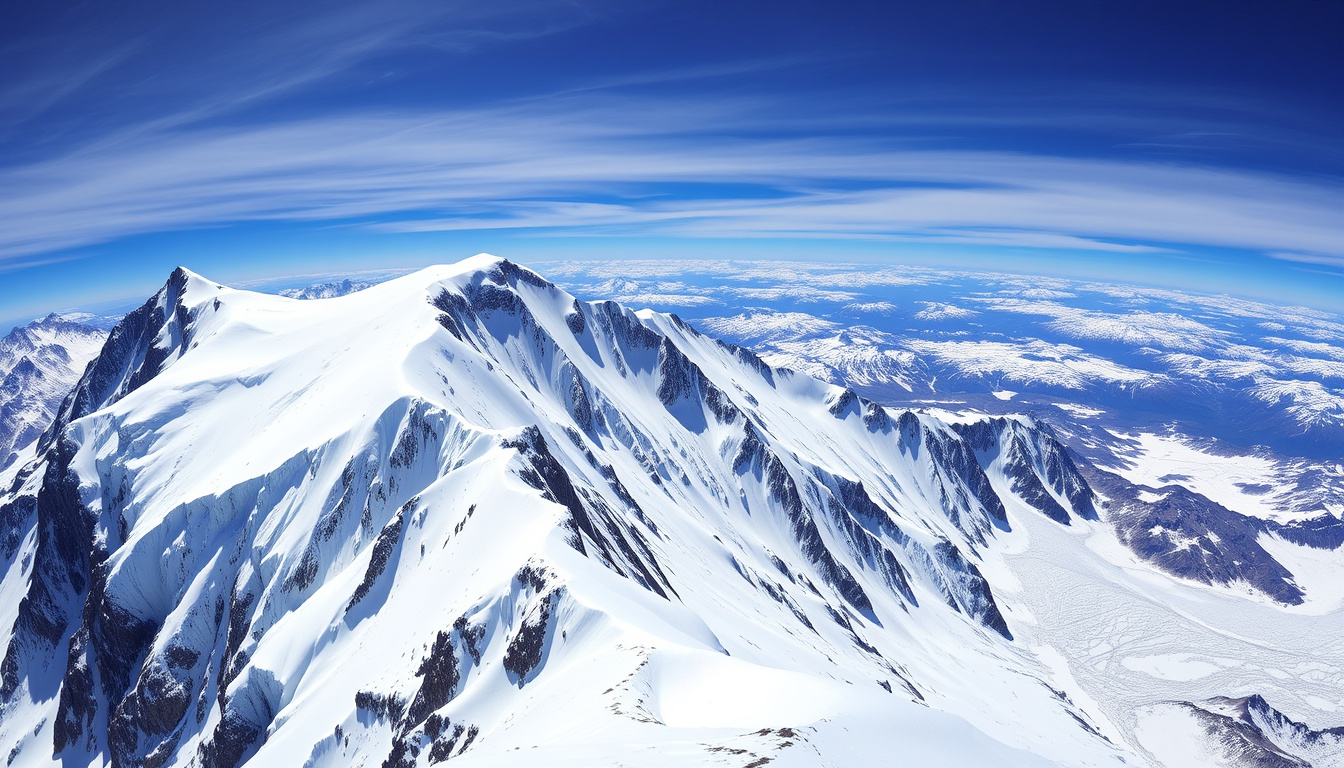
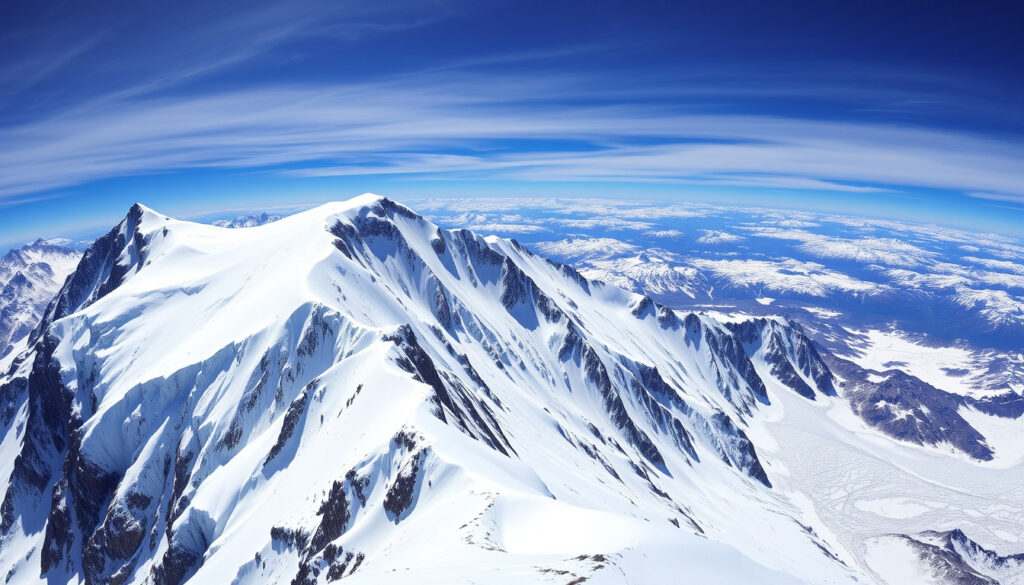
Few mountains in North America demand as much from a climber as Mount Logan. Canada’s highest peak stands 5,959 m (19,551 ft) tall in the remote St. Elias Mountains of the Yukon, and its massive icefields and volatile weather make it one of the continent’s most serious expedition objectives.
Height: 5,959 m (19,551 ft) ·
Rank: Highest in Canada, 2nd in North America ·
Location: St. Elias Mountains, Yukon Territory, Canada ·
First Ascent: 1925 by A.H. MacCarthy et al. ·
Typical Duration: 18–25 days expedition
Quick snapshot
- Highest peak in Canada at 5,959 m (ExplorersWeb (mountaineering news outlet))
- Located in the St. Elias Mountains, Yukon (Britannica (encyclopedia))
- First ascent in 1925 by A.H. MacCarthy’s team (ExplorersWeb)
- Exact number of climbers per year varies by season (SummitPost (community route database))
- Costs can fluctuate based on operator and season (Mountain Madness (guided expedition operator))
- First ascent expedition took 65 days (ExplorersWeb)
- First ascent of the south face (I-TO) completed May 4–8, 2010 (American Alpine Club (climbing journal))
- More climbers are attempting the King Trench route each year (Global Summit Guide (expedition planning resource))
- New alpine-style ascents on the East Ridge are being reported (ExplorersWeb)
| Attribute | Value |
|---|---|
| Height | 5,959 m (19,551 ft) |
| Mountain Range | St. Elias Mountains |
| Country | Canada (Yukon Territory) |
| First Ascent | 1925 by A.H. MacCarthy et al. |
| Number of Routes | Several, with King Trench being the most popular |
| Typical Duration | 18–25 days |
| Guided Expeditions | Available from multiple operators |
Where is Mount Logan located?
What mountain range is Mount Logan in?
- Mount Logan lies in the St. Elias Mountains, a coastal range that straddles the Alaska–Yukon border (Britannica (encyclopedia)).
- It is not part of the Rocky Mountains; the St. Elias range is a separate geological system (Britannica).
- The mountain measures about 25 miles long and 15 miles wide, giving it the largest base circumference of any non-volcanic mountain on Earth (ExplorersWeb (mountaineering news outlet)).
Is Mount Logan in the Rockies?
- No. The Rockies are farther east and south. Mount Logan belongs to the St. Elias Mountains, which form a separate chain near the Pacific coast (Britannica).
The pattern: Location drives every aspect of the climb — remoteness means longer logistics, greater reliance on air support, and fewer rescue options.
What makes Mount Logan special?
How does Mount Logan compare to Denali?
- Denali (6,190 m) is the highest peak in North America. Mount Logan is second at 5,959 m, but it has the largest base circumference of any non-volcanic mountain — over 100 km (ExplorersWeb).
- Logan’s icefields are far more extensive than Denali’s, and its weather is notoriously more volatile (International Mountain Guides (expedition operator)).
What is the height of Mount Logan?
- 5,959 m (19,551 ft) — the highest point in Canada (Britannica).
- The mountain is the source of the Hubbard and Logan Glaciers, two of the largest ice rivers in the region (Britannica).
For a climber choosing between Denali and Logan, the decision isn’t about height — it’s about commitment. Logan’s sheer size and isolation mean that even the standard route demands a 2- to 3-week self-sufficient expedition, with no easy bailout.
The trade-off: Logan’s size and weather make it a more challenging logistical puzzle than Denali for most teams, even though it’s 231 m lower.
How difficult is climbing Mount Logan?
What are the main routes on Mount Logan?
- The King’s Trench is the standard route, used by approximately 95% of summit attempts, according to a route overview from Global Summit Guide (expedition planning resource).
- The East Ridge offers a steeper, more technical line — described as “real climbing” by ExplorersWeb, with about 4,000 vertical meters of narrow ridge.
- Hummingbird Ridge is one of the most committing routes, with at least five deaths from avalanches (ExplorersWeb).
What is the King Trench route?
- The King’s Trench is described as the easiest way to the summit by International Mountain Guides (expedition operator), and is generally non-technical — often skied by climbers (Global Summit Guide).
- It is approximately 32 km long with about 3,700 m of elevation gain from base camp to summit (Global Summit Guide).
- The summit day is not technical but is long — about 14 km round trip and 2,600 ft of gain (International Mountain Guides).
Is Mount Logan more difficult than Denali?
- International Mountain Guides compares the King’s Trench climb to Denali’s West Buttress in overall seriousness (International Mountain Guides).
- However, Logan’s greater isolation and harsher weather often make it feel harder. Conditions include severe weather exposure, crevasses, avalanche problems, campsite complications, and a high col crossing (SummitPost (community route database)).
- Mount Logan requires advanced skills — 45 to 60 degree snow and ice travel and some rock up to about 5.6 to 5.8+ (Mountain Madness (guided expedition operator)).
Even the “easy” route on Logan is a serious undertaking. The King’s Trench may lack technical steep sections, but its length, combined with the Yukon’s unpredictable storms, has turned many teams back short of the summit.
How long does it take and how much does a Mount Logan expedition cost?
What is the typical duration of a Mount Logan climb?
- A typical expedition lasts 18–25 days, according to multiple operators (Mountain Madness, International Mountain Guides).
- This includes travel to base camp, acclimatization, and a summit window of several days.
What is the cost of a guided expedition?
- Guided expeditions cost between $10,000 and $20,000 USD, depending on the operator and services (Mountain Madness).
- Costs cover guides, food, equipment, transportation from Whitehorse, and permits. Climbers need to arrange their own travel to Whitehorse, Yukon.
What is included in the expedition cost?
- Most operators include: air taxi to base camp, all meals, group camping gear, satellite communications, guide fees, and Parks Canada permits (International Mountain Guides).
- Personal climbing gear (boots, crampons, ice axe, harness, etc.) is typically the climber’s responsibility.
Why this matters: At $10,000–$20,000 per person, a Logan expedition is a major financial commitment. For a Canadian team, the cost may be slightly lower due to shorter domestic travel, but the overall budget remains high because of the remote logistics.
Is Mount Logan forbidden to climb?
Which mountain is actually forbidden to climb?
- Mount Logan is not forbidden. It is a popular destination for experienced mountaineers, and climbing requires a permit from Parks Canada but is open to all who meet the requirements (Parks Canada (government agency)).
- The mountain that is forbidden to climb is Mount Kailash in Tibet, considered sacred in Hinduism, Buddhism, and Jainism. Climbing it is prohibited by law (Britannica).
Why is Mount Kailash forbidden?
- Mount Kailash is revered as the abode of deities in several religions. The Chinese government has banned all climbing attempts to respect its sacred status.
Are there any restrictions on climbing Mount Logan?
- Climbers must obtain a permit from Parks Canada and follow regulations for Kluane National Park. No summit fee is charged, but a registration fee applies (Parks Canada).
- There are no age restrictions, but operators typically require climbers to be at least 18 and have demonstrable mountaineering experience.
The implication: The confusion likely comes from clickbait articles that conflate “forbidden mountain” with Mount Logan. Logan is open, but it’s not a casual climb — the real barrier is skill, not law.
Mount Logan vs. Denali vs. Mount Everest: A comparison
Three of the world’s highest peaks demand very different kinds of preparation. Here is how they stack up on the factors that matter most to climbers.
| Attribute | Mount Logan | Denali (Mount McKinley) | Mount Everest |
|---|---|---|---|
| Height | 5,959 m (19,551 ft) | 6,190 m (20,310 ft) | 8,849 m (29,032 ft) |
| Location | St. Elias Mountains, Yukon, Canada | Alaska Range, Alaska, USA | Himalayas, Nepal/Tibet |
| First Ascent | 1925 (A.H. MacCarthy et al.) | 1913 (Hudson Stuck et al.) | 1953 (Hillary and Norgay) |
| Standard Route Difficulty | King’s Trench – non‑technical but long; 18–25 days | West Buttress – moderate technical; 15–20 days | South Col – high altitude, fixed ropes; 60+ days |
| Typical Cost (guided) | $10,000–$20,000 USD | $8,000–$15,000 USD | $35,000–$100,000 USD |
| Objective Hazards | Crevasse, avalanche, severe weather | Cold, crevasse, altitude | Altitude, avalanche, Khumbu Icefall |
The pattern: Logan is the most logistically demanding of the three for its height — it offers a bigger challenge per vertical meter than Denali, and a fraction of the cost of Everest.
Confirmed facts vs. what remains unclear
Confirmed facts
- Mount Logan is the highest peak in Canada (Britannica).
- It is located in the St. Elias Mountains (Britannica).
- First ascent in 1925 by A.H. MacCarthy’s team (ExplorersWeb).
- King’s Trench is the standard route (International Mountain Guides).
What’s unclear
- Exact number of climbers per year varies by season (SummitPost).
- Costs can fluctuate based on operator and season (Mountain Madness).
- Success rate data is not centrally tracked.
For a deeper look at the logistics, check out our dedicated Mount Logan climbing guide.
Mount Logan’s reputation as a technical, high-commitment peak is well earned. For the Canadian mountaineer who has already climbed Denali, the next logical step is Logan — not because it’s taller, but because it’s a sterner test of endurance and self-sufficiency. The choice is clear: invest in proper training and a reliable operator, or risk being one of the many who turn back before the summit.
Related reading: Mount Logan: Canada’s Highest Peak Expedition Guide
mountaineers.org, mountaineers.org, reddit.com, pensiamo.com, basecamp.peakview.store, massinitiative.org, summitpost.org
Frequently asked questions
What is the best time of year to climb Mount Logan?
May through July offers the most stable weather and long daylight hours. Most guided expeditions operate during this window.
Do I need a permit to climb Mount Logan?
Yes, you need a permit from Parks Canada for Kluane National Park. Registration is mandatory and a fee applies.
What gear is required for a Mount Logan expedition?
Standard high-altitude mountaineering gear: mountaineering boots, crampons, ice axe, harness, helmet, sleeping bag rated to -30°C, and all technical clothing. Operators provide group gear.
How do I get to Mount Logan?
Fly to Whitehorse, Yukon, then take a chartered bush plane or helicopter to the base camp on the Logan Glacier.
Is Mount Logan harder than Denali?
Most experts say Logan is at least as serious, and often more so, due to its remoteness, extreme weather, and longer approach. The King’s Trench is comparable to the West Buttress in difficulty.
What is the success rate on Mount Logan?
Public data is limited, but operators estimate around 50–60% summit success, heavily dependent on weather windows.
Are there any age restrictions?
No official age limit, but guided operators typically require climbers to be at least 18 and have previous high-altitude experience.
How many people have climbed Mount Logan?
Exact numbers are not tracked centrally, but it is estimated that fewer than 3,000 people have summited since the first ascent in 1925 — far fewer than Denali or Everest.
Related stories





Ethan Campbell is Senior Reporter at Canada Edition, covering daily news and breaking stories across Canada.