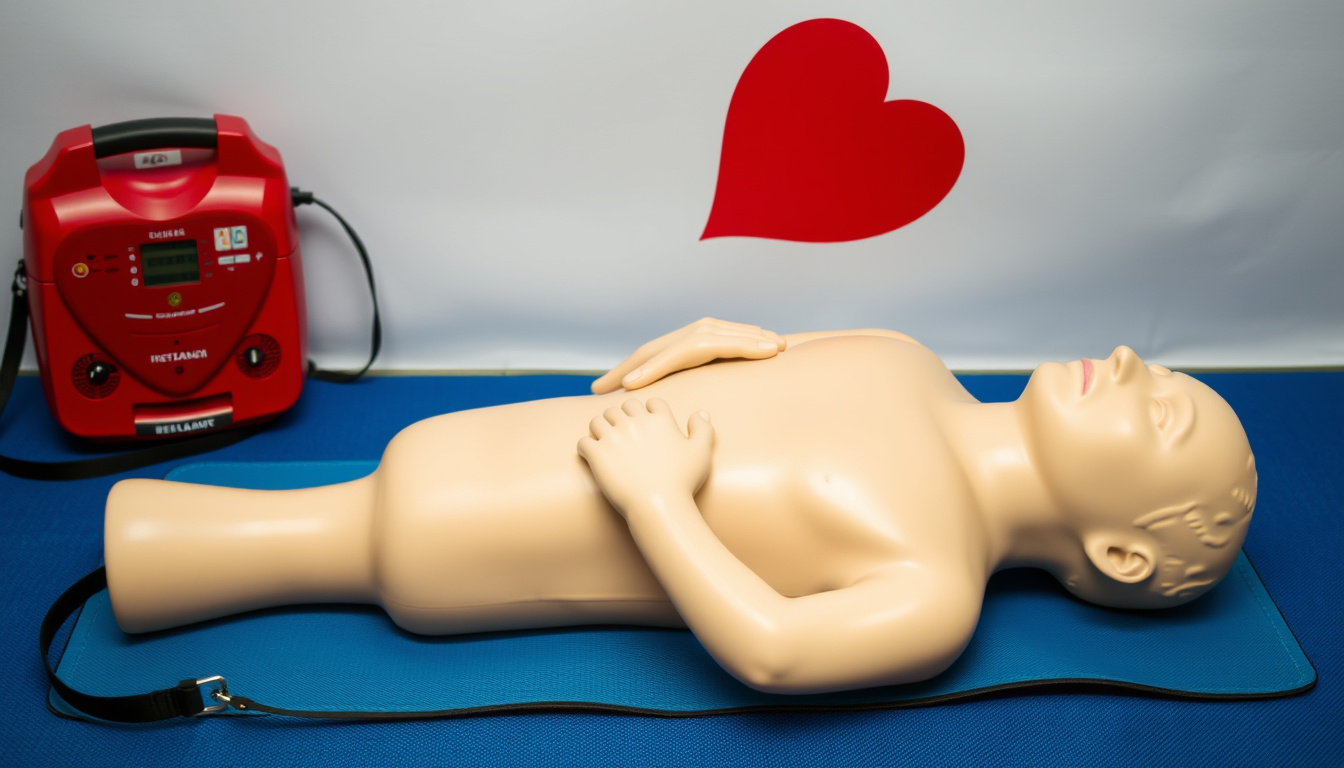
You’ve probably heard the acronym tossed around in movies, first-aid classes, or maybe during that awkward moment when someone shouts “Is anyone CPR-trained?” and the room goes quiet. The letters stand for more than a clipboard test; they describe a sequence of actions that can literally restart a stalled heart. If you’ve ever wondered what the full name is or how the steps work, the clear, evidence-backed breakdown follows—starting with what CPR actually means and why the modern approach flips the old ABC order on its head.
CPR stands for Cardiopulmonary resuscitation ·
Recommended compression-to-ventilation ratio (adult) 30:2 ·
Hands-only CPR recommended for Untrained bystanders ·
Survival rate increase with immediate CPR 2-3 times ·
Number of steps in adult CPR 7 ·
Chain of survival includes Early CPR and defibrillation
Quick snapshot
- CPR combines chest compressions and rescue breaths to restore circulation and oxygenation (CPRAEDCourse (CPR training provider))
- Chest compressions maintain blood flow to the brain and heart, doubling or tripling survival odds (American Red Cross (leading humanitarian organization))
- Hands‑only CPR (100–120 compressions/min) is as effective as conventional CPR for adult out-of-hospital cardiac arrest when performed by untrained bystanders (Cleveland Clinic (top‑ranked hospital))
- Optimal compression depth for elderly patients remains debated (Wikipedia (medical reference))
- Optimal compression depth for obese or very thin patients remains debated (Wikipedia (medical reference))
- Whether mouth-to-mouth adds survival benefit over hands-only in all hospital-settings (NCBI StatPearls (peer-reviewed medical database))
- 1960: Modern closed-chest CPR developed by Kouwenhoven, Jude, and Knickerbocker (NCBI StatPearls) (American Heart Association (cardiac care authority))
- 2010: AHA shifts sequence from A‑B‑C to C‑A‑B, prioritising compressions (American Heart Association (cardiac care authority))
- 2025 AHA guidelines expected to further emphasise high‑quality compressions and early defibrillation (American Heart Association)
- Growing push for widespread hands‑only CPR training in schools and workplaces (American Red Cross)
Five key facts stand out when you first unpack the acronym:
| Label | Value |
|---|---|
| Definition | Cardiopulmonary resuscitation |
| Compression depth (adults) | At least 2 inches (5 cm) |
| Compression rate | 100-120 per minute |
| Ratio (compressions to breaths) | 30:2 (two rescuer) or hands-only |
| When to use AED | As soon as available, after first compression cycle |
Notice the consistent emphasis on compressions: depth, rate, ratio—all designed to keep blood moving when the heart can’t.
What do the letters CPR stand for?
What is the full form of CPR?
- Cardiopulmonary Resuscitation – the full medical term combines “cardio” (heart), “pulmonary” (lungs), and “resuscitation” (reviving) (CPRAEDCourse (CPR training provider)).
- It is an emergency procedure performed when someone’s breathing or heartbeat has stopped (Cleveland Clinic).
What does CPR stand for in medical terms?
- In clinical language, CPR means manually pumping the heart via chest compressions and providing artificial ventilation to oxygenate the brain and organs (Avive AED (defibrillation experts)).
- The American Heart Association (national cardiac care authority) defines it as “an emergency lifesaving procedure performed when the heart stops beating.”
What does CPR stand for in nursing?
- In nursing contexts, CPR is part of the Basic Life Support (BLS) curriculum, taught alongside AED use and the chain of survival (Mayo Clinic (leading medical center)).
- Nurses are trained to perform both one‑rescuer and two‑rescuer CPR, often with advanced airway management.
The implication: regardless of the setting, the core meaning stays the same—a coordinated effort to pump blood and air until advanced care arrives.
What are the 7 steps in CPR?
When to start CPR?
- CPR should begin immediately if the person is unresponsive and not breathing normally (or only gasping) (Mayo Clinic).
- Check for responsiveness: shout, tap the shoulder, and call 911 (or have someone else do it).
What is the correct hand position for chest compressions?
- Place the heel of one hand on the center of the chest (lower half of the sternum), put the other hand on top, and interlock fingers (Cleveland Clinic).
- Keep arms straight, shoulders directly above the hands, and push hard and fast.
How deep should compressions be?
- At least 2 inches (5–6 cm) for adults, at a rate of 100–120 compressions per minute (Wikipedia (medical reference)).
- Allow full chest recoil after each compression.
The 7‑step sequence (American Red Cross (humanitarian organization)) is:
- Check scene safety.
- Check responsiveness and call 911.
- Open airway (head‑tilt chin‑lift).
- Check breathing (look, listen, feel ≤10 sec).
- Give 30 chest compressions.
- Give 2 rescue breaths (if trained).
- Use an AED as soon as available.
Why this matters: the sequence forces a rhythm that keeps compressions first—a direct shift from the old A‑B‑C model that began with airway.
Should you do mouth-to-mouth?
Why are rescue breaths no longer recommended for untrained bystanders?
- Hands‑only CPR is now the standard for bystanders without formal training because it eliminates hesitation and increases the likelihood that someone will act (American Red Cross).
- Studies show that compression‑only CPR yields similar survival rates to conventional CPR in adult out‑of‑hospital arrests when started immediately (American Heart Association).
When should mouth-to-mouth be used?
- Rescue breaths remain recommended for trained responders, infants, children, and victims of drowning or drug overdose (Mayo Clinic).
- If you are untrained, skip breaths and keep pushing on the chest.
The trade‑off: omitting mouth‑to‑mouth removes a barrier to action for most people, but trained rescuers still use it to improve oxygenation in certain scenarios.
Should you remove a bra when using a defibrillator?
Do you remove a woman’s bra for CPR?
- Yes – under‑wire bras must be removed or cut to allow proper AED pad placement on bare skin (Avive AED (defibrillation specialists)).
- Modesty must not delay the shock; if needed, cut the bra straps rather than waste time.
What is the 3 bra rule? (context: defibrillator pad placement)
- Not a formal medical rule, but a common reminder: remove any underwire, metal fasteners, or thick fabric that could interfere with pad adhesion and current delivery (Cleveland Clinic).
- Shaving excessive chest hair may also be needed for the pads to stick.
The upshot: taking two seconds to remove an under‑wire bra can mean the difference between a successful defibrillation and a wasted shock.
Why did CPR change from A-B-C to C-A-B?
What is CPR now called?
- CPR is still called Cardiopulmonary Resuscitation, but the recommended sequence is now “C‑A‑B”: Compressions first, then Airway, then Breathing (American Heart Association).
Why are rescue breaths no longer recommended first?
- The 2010 guideline change was driven by evidence that early compressions improve survival and that opening the airway and giving breaths often delay the start of chest compressions by precious seconds (NCBI StatPearls).
- Blood usually retains enough oxygen for the first few minutes of cardiac arrest, so compressions alone can sustain the brain until help arrives.
The pattern: the shift from “airway first” to “compressions first” reflects a hard lesson—every second without blood flow reduces survival chances, and chest compressions are the most critical intervention.
Timeline of CPR guideline evolution
- 1960 – Modern closed‑chest CPR developed by Kouwenhoven, Jude, and Knickerbocker (NCBI StatPearls).
- 2008 – American Heart Association endorses hands‑only CPR for untrained bystanders (American Heart Association).
- 2010 – AHA changes sequence from A‑B‑C to C‑A‑B.
- 2020 – Continued emphasis on high‑quality compressions and early defibrillation; rescue breaths still recommended for trained responders.
The catch: each revision tightened the focus on what actually saves lives—blood flow—while stripping away steps that caused hesitation.
What’s confirmed and what’s still unclear
Confirmed facts
- CPR significantly improves survival from cardiac arrest (American Red Cross)
- Chest compressions are the most critical component (American Heart Association)
- Hands‑only CPR is as effective as conventional CPR for adult out‑of‑hospital cardiac arrest when performed by untrained bystanders (Cleveland Clinic)
- A‑B‑C to C‑A‑B change increases likelihood of timely compressions (NCBI StatPearls)
What’s unclear
- Optimal compression depth for elderly patients (Wikipedia)
- Optimal compression depth for obese or very thin patients (Wikipedia)
- Whether mouth‑to‑mouth always increases survival over hands‑only in all settings (NCBI StatPearls)
- Exact impact of bra removal on defibrillation success (Anecdotal evidence)
The pattern: most of what we know is well established, but nuance remains for special populations—the core message about starting compressions immediately is undisputed.
Expert voices on CPR
“CPR is an emergency treatment that’s done when someone’s breathing or heartbeat has stopped.”
— Mayo Clinic (leading medical center)
“Chest compressions are the foundation of CPR; early compression improves survival.”
— American Heart Association (national cardiac care authority)
“CPR stands for cardiopulmonary resuscitation. It’s an emergency procedure that can save your life if you’re in cardiac arrest.”
— Cleveland Clinic (top‑ranked hospital)
For the bystander who witnesses a sudden collapse, the decision is no longer complicated by worry about mouth‑to‑mouth or precise ratios. Push hard and fast in the center of the chest, call 911, and grab an AED if one is nearby. For the trained rescuer, the full C‑A‑B sequence remains the gold standard—but the message that saves the most lives is also the simplest: just start compressions.
For those looking to put this knowledge into practice, CPR first aid courses provide hands-on training that reinforces the steps outlined in the official guidelines.
Frequently asked questions
What is the recovery position after successful CPR?
Place the person on their side with the top leg bent to support the body, head tilted back to keep the airway open. Monitor breathing until emergency services arrive.
Can CPR be performed on infants under 1 year?
Yes. Use two fingers for chest compressions about 1.5 inches deep, and give gentle rescue breaths. Follow pediatric BLS guidelines.
How long should you continue CPR without stopping?
Continue until the person shows signs of life, an AED is ready to shock, or trained medical help takes over. Do not stop unless you are exhausted.
What is the survival rate for out-of-hospital cardiac arrest?
Approximately 10% overall, but immediate bystander CPR can double or triple that rate (American Red Cross).
Should you use an AED on a child?
Yes. Use pediatric pads if available (for ages 1–8) or adult pads if not. Do not delay defibrillation.
What are the legal protections for good Samaritans performing CPR?
Most states and countries have Good Samaritan laws that protect untrained bystanders who act in good faith. Check local regulations.
How does CPR differ for drowning victims?
For drowning, rescue breaths are critical—start with 2 rescue breaths before compressions, then follow 30:2 cycles.
Related reading
- Easy Mindfulness Tips for Beginners – Breath awareness techniques that complement the compression rhythm.
- How to Get Rid of a Stye Overnight – Quick first‑aid for common eye conditions.
Related stories





Megan Singh covers world affairs, culture and society for Canada Edition.