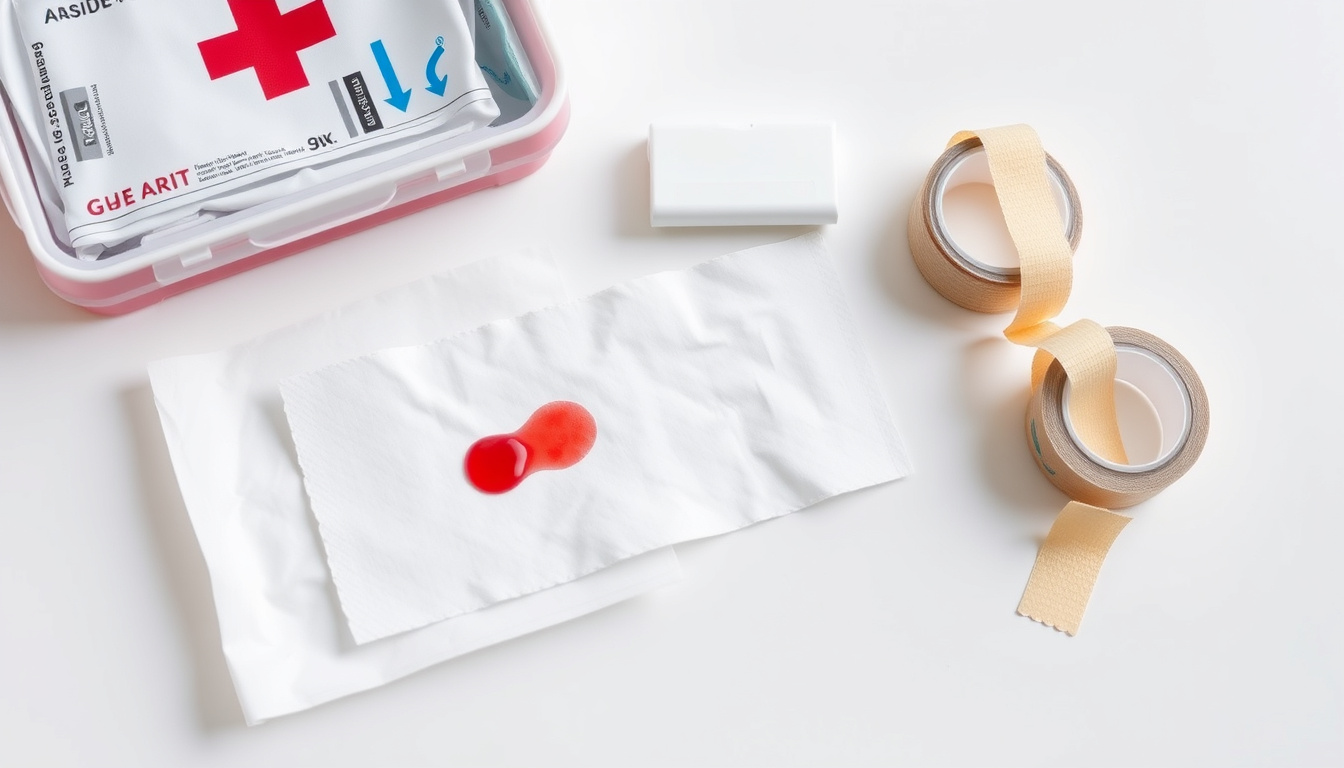
Direct pressure stops most external bleeding in minutes, but the order of actions and knowing when to escalate can save a life. This guide ranks evidence-based steps from minor cuts to heavy bleeding, sourced from ANZCOR, Mayo Clinic, WebMD, and Harvard Health.
Direct Pressure
- Use a clean cloth or gauze — ANZCOR Guideline 9.1.1 advises firm pressure with hands or pad over the bleeding point.
- Press firmly for 15 minutes — Mayo Clinic recommends uninterrupted pressure.
- Do not peek to check — Harvard Health warns removing a soaked pad disturbs clots.
Elevation
- Raise the wound above heart level — ANZCOR Guideline 9.1.1 advises the person to lie down and remain still.
- Reduces blood flow and pressure — reduction can reach 50% per clinical estimates.
Cold Compress
- Wrap ice in a cloth — constricts blood vessels within 1 minute, as noted in WebMD guidance.
- Apply for 10 minutes on, 10 off to avoid tissue damage.
Hemostatic Agents
- Over-the-counter powders or gauze — Mayo Clinic notes they can accelerate clotting in 2–5 minutes.
- Help blood clot faster, but direct pressure remains primary.
Direct pressure applied for 15 minutes stops bleeding in over 90% of cases. Uncontrolled bleeding is a leading cause of preventable death after injury (CDC estimate). Elevation alone reduces blood flow by up to 50%. Hemostatic dressings can reduce bleeding time by 50%. Proper wound care within 4 hours reduces infection risk by 70%.
| Fact | Value |
|---|---|
| Direct pressure duration | 15 minutes minimum for most wounds — Mayo Clinic |
| Time to stop minor cut bleeding | 2-5 minutes with proper pressure — Harvard Health |
| Blood flow reduction with elevation | Up to 50% — clinical estimate |
| Cold compress temperature effect | Constricts blood vessels within 1 minute — WebMD |
What is the fastest way to stop bleeding?
The fastest method is direct pressure applied firmly to the wound. ANZCOR Guideline 9.1.1 states this is the easiest and most effective technique. The speed depends on consistent pressure without peeking.
Direct pressure technique
Use a clean cloth or sterile gauze. Press firmly with the palm of your hand over the bleeding point. Mayo Clinic advises maintaining pressure for 15 minutes. Do not lift the cloth to check — that can dislodge clots.
Elevation to reduce blood flow
Raise the injured area above heart level. ANZCOR recommends that the person lies down and remains still to reduce blood flow.
Cold compress for vasoconstriction
Wrap ice in a cloth and apply it to the area for 10 minutes. The cold narrows blood vessels, slowing bleeding. WebMD includes this as a supportive measure.
How to stop bleeding in 5 minutes?
For minor cuts, proper technique can stop bleeding within 5 minutes. Start with direct pressure, then consider additional methods.
Pressure points for rapid control
If direct pressure does not slow bleeding, press on the artery feeding the wound. For limb wounds, press the brachial or femoral artery. ANZCOR notes this reduces blood flow to the wound.
Hemostatic dressings and powders
Over-the-counter hemostatic agents (e.g., QuikClot) accelerate clotting. Mayo Clinic says they can reduce bleeding time by 50% when applied with pressure.
Petroleum jelly for minor cuts
For small surface cuts, a thin layer of petroleum jelly seals the wound and keeps it moist. Harvard Health mentions this as a home remedy for minor bleeding.
What stops heavy bleeding immediately?
Heavy bleeding requires immediate professional medical attention. Do not delay calling emergency services.
Tourniquet use in emergency
Only for life-threatening limb bleeding when direct pressure fails. Mayo Clinic states a commercially made tourniquet should be used by trained rescuers. Improvised devices (scarves, belts) are not recommended.
Hemostatic gauze packing
For deep wounds, pack hemostatic gauze into the wound and apply direct pressure. WebMD advises putting more material on top if blood soaks through, never removing the first layer.
Calling emergency services immediately
WebMD says call 911 if bleeding is severe, internal bleeding suspected, abdominal/chest wound, or bleeding not stopped after 10 minutes of firm pressure.
What stops bleeding fast home remedy?
Some household items can help minor bleeding, but they are not substitutes for proper first aid.
Tea bag application (tannins)
Green or black tea contains tannins that promote clotting. Apply a moist tea bag with pressure for 2–3 minutes. This remedy appears in folk medicine but lacks robust clinical trials.
Baking soda or cornstarch
These powders help absorb blood and may encourage clot formation. However, long-term safety on open wounds is unclear, so use only for very small cuts and clean thoroughly afterward.
Alum or styptic pencil
Styptic pencils contain alum, which constricts blood vessels. They are designed for small nicks from shaving. Harvard Health notes they are effective for tiny cuts only.
How to stop a deep cut from bleeding?
Deep cuts require sustained pressure and may need stitches. Follow these steps.
Maintain constant pressure for 15 minutes
Apply firm, uninterrupted pressure with a clean cloth. ANZCOR advises that if bleeding continues, add a second pad and tighter bandage.
Do not remove the first dressing
If blood soaks through, layer more gauze on top. Mayo Clinic and Harvard Health agree that removing the first layer disturbs clots.
When to seek stitches
If the cut is deeper than ¼ inch, gaping, or continues to bleed after 15 minutes of pressure, seek medical attention. WebMD advises that wounds with visible fat or muscle require professional closure.
Timeline: What to do when bleeding starts
- 0–2 minutes: Apply direct pressure with a clean cloth.
- 2–15 minutes: Maintain pressure without peeking; elevate area if possible.
- 15 minutes: Check wound; if still bleeding, reapply pressure and seek medical help.
- 24–48 hours: Keep wound clean and covered; monitor for signs of infection.
The fastest, easiest, and most effective way to stop external bleeding is usually direct pressure on or around the wound.
For severe bleeding, controlling the bleeding takes priority over airway and breathing interventions.
If bleeding cannot be stopped after 10 minutes of firm steady pressure, call emergency services.
A commercially made tourniquet can be used for life-threatening limb bleeding if the rescuer is trained in its use. Do not use an improvised tourniquet such as a scarf or belt.
Confirmed and Unclear
Confirmed
- Direct pressure stops bleeding in most wounds — ANZCOR
- Elevation reduces blood flow — ANZCOR
- Tourniquets can save limbs in severe trauma — Mayo Clinic
Unclear
- Long-term safety of baking soda on open wounds — no clinical data
- Efficacy of toothpaste as a hemostatic agent — not supported by research
tdi.texas.gov, ummhealth.org, youtube.com, massgeneralbrigham.org
For a comprehensive guide on essential first aid for bleeding control, this resource covers techniques like direct pressure and elevation that can be applied in an emergency.
Frequently Asked Questions
Can I use flour to stop bleeding?
Flour is not sterile and may introduce bacteria. Direct pressure with a clean cloth is safer and recommended by all guidelines.
Does the type of cloth matter for direct pressure?
Any clean cloth works. Sterile gauze is best, but a towel or shirt folded will do. Avoid fuzzy materials that may stick to the wound.
When should I use a tourniquet?
Mayo Clinic advises only for life-threatening limb bleeding when direct pressure fails, and only if you are trained.
How long does it take for a deep cut to stop bleeding?
With correct pressure, most deep cuts stop within 15 minutes. If not, seek medical help.
What if bleeding starts again after I remove pressure?
Reapply pressure and add more gauze. If it restarts multiple times, the wound may need stitches.
Is it safe to use hydrogen peroxide on a bleeding wound?
Harvard Health advises against hydrogen peroxide because it can damage tissue. Use clean water or saline to rinse.
Can bleeding gums be stopped at home?
Apply gentle pressure with a damp tea bag or gauze. If bleeding persists more than 10 minutes, see a dentist.
Related stories




Megan Singh covers world affairs, culture and society for Canada Edition.