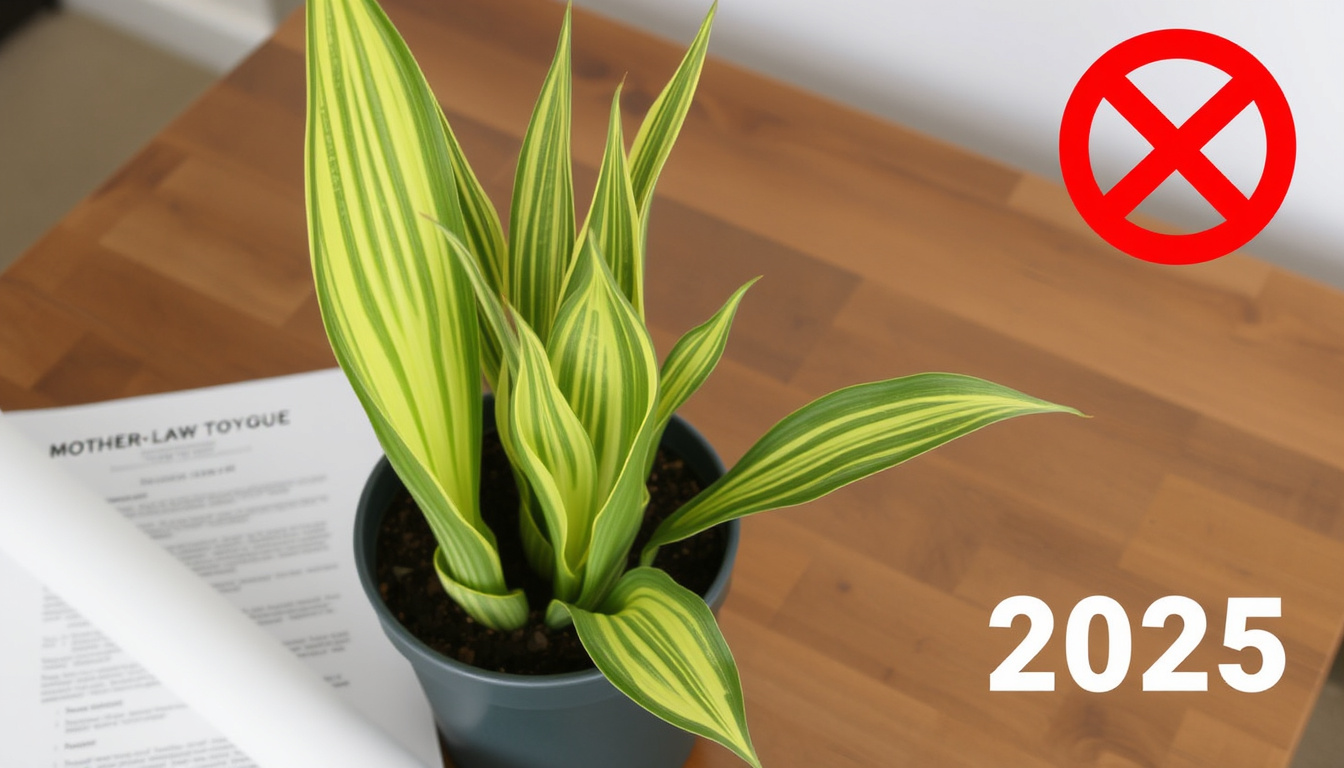

Anyone who has ever owned a snake plant knows the quiet satisfaction of watching it thrive on near-total neglect, yet this same resilient houseplant carries a surprise: starting August 5, 2025, selling it in the European Union will be illegal because of its invasive potential. This guide covers exactly how to care for mother-in-law’s tongue, what benefits it really offers, and why regulators are stepping in.
Scientific name: Dracaena trifasciata (formerly Sansevieria trifasciata) ·
Common names: Snake plant, Mother-in-law’s tongue, Viper’s bowstring hemp ·
Native region: West Africa ·
NASA air-purifying study: Yes – removes benzene, formaldehyde, trichloroethylene ·
Toxicity to pets: Mildly toxic (saponins) ·
Light preference: Low to bright indirect
Quick snapshot
- Native to West Africa (Bath Garden Center (plant care specialists))
- Listed as an invasive species in the EU, sale banned from August 5, 2025 (European Commission (alien species regulation))
- Scientific name Dracaena trifasciata (formerly Sansevieria trifasciata) – taxonomic reclassification is not universally accepted (Epic Gardening (horticultural reference))
- Exact long-term health effects of saponin exposure in humans remain understudied (Epic Gardening (horticultural reference))
- Full extent of invasive spread in non-native climates is still being monitored (Epic Gardening (horticultural reference))
- Ancient times: used in West Africa for fibre and medicine
- 1989: NASA Clean Air Study identifies snake plant as effective air purifier
- August 5, 2025: EU ban on sale takes effect
- Existing owners in the EU can keep their plants but cannot sell or propagate commercially
- Garden centres are expected to phase out stock by mid-2025
- Monitoring of wild populations will intensify in southern Europe
The same traits that make mother-in-law’s tongue a perfect beginner plant—drought tolerance, fast growth, easy propagation—also make it a potential invader in warm climates. European regulators decided the ecological risk outweighs the horticultural appeal.
Here is a quick reference for the plant’s key characteristics.
| Attribute | Value |
|---|---|
| Scientific name | Dracaena trifasciata |
| Common names | Mother-in-law’s tongue, Snake plant, Viper’s bowstring hemp |
| Native range | West Africa |
| Mature height | Up to 4 ft (1.2 m) |
| Light requirement | Low to bright indirect |
| Watering need | Low; let soil dry completely |
| Pet toxicity | Yes (saponins) |
| 2025 EU ban | Yes – sale prohibited from August 5, 2025 |
Where to Place a Mother-in-Law’s Tongue Plant in the House?
Best rooms for snake plant
- Bedrooms – produces oxygen at night, may improve sleep quality (Wikipedia (botanical reference))
- Living rooms – indirect light is sufficient
- Offices – tolerates fluorescent lighting and dry air
Place the plant in a spot that receives bright, filtered light or moderate indirect light. Direct afternoon sun can scorch the leaves, though a few hours of morning sun are fine.
Feng shui considerations
- Often placed near entryways to ward off negative energy
- Sharp, upward leaves are said to protect against harsh sha chi
- Best positioned in the wealth or fame bagua areas
Few plants match the snake plant for easy feng shui integration. The catch: in small rooms, its tall leaves can feel overpowering—balance with rounder foliage like a peace lily.
Most houseplants stop producing oxygen at night; snake plants continue via crassulacean acid metabolism. For apartment dwellers in Toronto or London, that means a low-maintenance bedroom companion that keeps air moving while you sleep.
The implication: snake plants offer a rare combination of nighttime oxygen production and low maintenance, making them ideal for bedrooms.
What Are the Benefits of the Mother-in-Law’s Tongue Plant?
Air purification
The 1989 NASA Clean Air Study (space agency research) found that snake plants effectively remove benzene, formaldehyde, and trichloroethylene from sealed chambers. While home conditions differ, the plant’s metabolically active leaves do continuously filter volatile organic compounds.
Low maintenance
- Water every 2–8 weeks depending on season (Epic Gardening (horticultural reference))
- Thrives in low light—ideal for windowless bathrooms
- Drought-tolerant: leaves store water like succulents
Aesthetic appeal
The upright, sword-like foliage comes in deep green, variegated yellow-edge, and even cylindrical (Sansevieria cylindrica) forms. It works as a sculptural accent in modern interiors.
The pattern: a plant that cleans air, survives neglect, and looks striking—yet still gets banned. The trade-off between indoor utility and outdoor invasiveness is the real story.
The implication: mother-in-law’s tongue earns its reputation as a low-cost, low-effort air purifier.
Why Is It Called ‘Mother-in-Law’s Tongue’?
Origin of the common name
- The long, pointed leaves were likened to a sharp tongue (Wikipedia (botanical reference))
- Historical nickname emerged in the Victorian era
- Also known as snake plant for the patterned leaves
Other common names
- Viper’s bowstring hemp – fibres were used for bowstrings
- Saint George’s sword (Portugal, Brazil)
- Good luck plant (China)
What this means: the plant’s many names reflect its global spread. West African fibre, Victorian parlour joke, feng shui charm—it has worn many hats.
How to Take Care of a Mother-in-Law’s Tongue Plant?
Eight measurements, one rule: neglect beats attention. Follow this step-by-step routine.
Watering schedule
- Check soil: if the top 2 inches are dry, it’s safe to water (Bath Garden Center (plant care specialists))
- In winter, water every 3–4 weeks
- Soft, wrinkly leaves mean underwatered; mushy, pale leaves mean overwatered
Light requirements
- Low indirect light to bright indirect – avoid direct afternoon sun
- Will survive under fluorescent office lights
- Variegated varieties need more light to hold their pattern
Soil and repotting
- Use a well-draining mix: perlite, peat moss, coarse sand (Jay Scotts (landscaping and plant care))
- Repot every 2–3 years or when roots crowd the pot
- Choose a pot with drainage holes
Propagation
- Division: separate clumps at the root ball
- Leaf cuttings: cut a leaf into 3-inch pieces, root in water or soil
- Pups: remove offsets when they reach 4 inches tall
The upshot: one plant can produce dozens of offspring with almost zero effort—exactly why regulators worry about escape outside the pot.
Are There Reasons Not to Keep a Sansevieria at Home?
Upsides
- Requires almost no maintenance
- NASA-studied air purification
- Long-lived and easy to propagate
- Survives in low light
Downsides
- Toxic to cats and dogs (saponins) – causes vomiting, diarrhoea
- Invasive in subtropical regions – banned in the EU from 2025
- Can cause contact dermatitis in sensitive individuals
- Overwatering leads to root rot
Toxicity to pets
The leaves contain saponins, a natural detergent-like compound. If ingested, it can cause nausea, drooling, and swollen tongue in cats and dogs (Epic Gardening (horticultural reference)). The toxicity is mild but unpleasant.
Invasive potential in warm climates
In parts of Florida, Australia, and southern Europe, snake plants escape gardens and spread into natural areas. The European Commission (alien species regulation) lists Dracaena trifasciata as an invasive alien species of Union concern, making its sale illegal from August 5, 2025.
2025 EU ban
Existing owners can keep their plants but cannot sell, trade, or propagate for commercial purposes. Garden centres must sell existing stock before the ban date.
EU residents should not panic: the ban targets commercial sale, not personal ownership. But if you are in a region where the plant can grow outdoors (Mediterranean, Gulf Coast, Australia), consider keeping it in a pot to prevent root spread.
The catch: the same traits that make it easy to propagate also make it a potential invader.
Timeline: Mother-in-Law’s Tongue from Fibre to Ban
- Ancient times
- Used in West Africa for bowstrings, rope, and medicinal preparations.
- 1940s–1980s
- Popularised as an indoor houseplant in Europe and North America; the name “mother-in-law’s tongue” becomes common.
- 1989
- NASA (space agency research) identifies the plant as one of the top air-purifying houseplants.
- 2020s
- Growing awareness of invasive potential in subtropical regions; Australia adds it to weed lists.
- August 5, 2025
- EU ban on sale of Dracaena trifasciata under the Invasive Alien Species Regulation comes into force.
The pattern: from useful fibre to regulated invasive, the plant’s journey mirrors global trade and ecological awareness.
What We Know and What’s Still Unclear
Confirmed facts
- Dracaena trifasciata is a recognised air-purifying plant (NASA)
- It is mildly toxic to cats and dogs (Epic Gardening)
- Sale is banned in the EU from August 5, 2025 (European Commission)
What’s still unclear
- Long-term human health effects of saponin exposure are not fully studied
- Exact rate of invasive spread in southern Europe remains under observation
“The snake plant is one of the most forgiving houseplants you can own. It will survive low light, drought, and even a bit of incompetence.”
— Wikipedia article on Dracaena trifasciata (botanical reference)
“We tested 29 common indoor plants for their ability to remove volatile organic compounds. The snake plant was among the top performers across all three chemicals tested.”
— NASA Clean Air Study, 1989 (space agency research)
“Dracaena trifasciata is listed as an invasive alien species of Union concern. Member states must prohibit its sale, possession, and transport by August 2025.”
— European Commission Invasive Alien Species Regulation (2024)
Mother-in-law’s tongue is not a villain. It is a tough, beautiful plant that happens to be a little too successful outside its native range. For Canadian owners in Vancouver or Halifax, the EU ban is irrelevant—the plant stays indoors. For British gardeners in Cornwall or greenhouse owners in Barcelona, the choice is clear: keep it contained, or replace it with a non-invasive alternative before 2025.
For those looking to keep their snake plant thriving, understanding proper placement and care is essential to avoid common issues like overwatering.
Frequently asked questions
How often should I repot a mother-in-law’s tongue?
Every 2–3 years, or when roots push through the drainage holes. Spring is best.
Can mother-in-law’s tongue survive in a bathroom?
Yes, the humidity and low light suit it well. Just avoid direct contact with a shower spray.
Does the snake plant really improve air quality?
In sealed chambers, yes; in a typical home the effect is modest but measurable. It continuously releases oxygen at night.
How do I fix yellow leaves on my snake plant?
Yellow leaves usually signal overwatering. Check the soil; if wet, repot into dry, well-draining mix and water less.
Can I put my mother-in-law’s tongue outside in summer?
Yes, if night temperatures stay above 50 °F (10 °C) and the pot is in a shaded spot. Bring it inside before frost.
What pests attack snake plants?
Spider mites, mealybugs, and root rot from overwatering. Wipe leaves with neem oil for minor infestations.
Is mother-in-law’s tongue safe for children?
Ingestion may cause vomiting or drooling due to saponins. Keep out of reach of toddlers and pets.
Related reading
Related stories




Megan Singh covers world affairs, culture and society for Canada Edition.