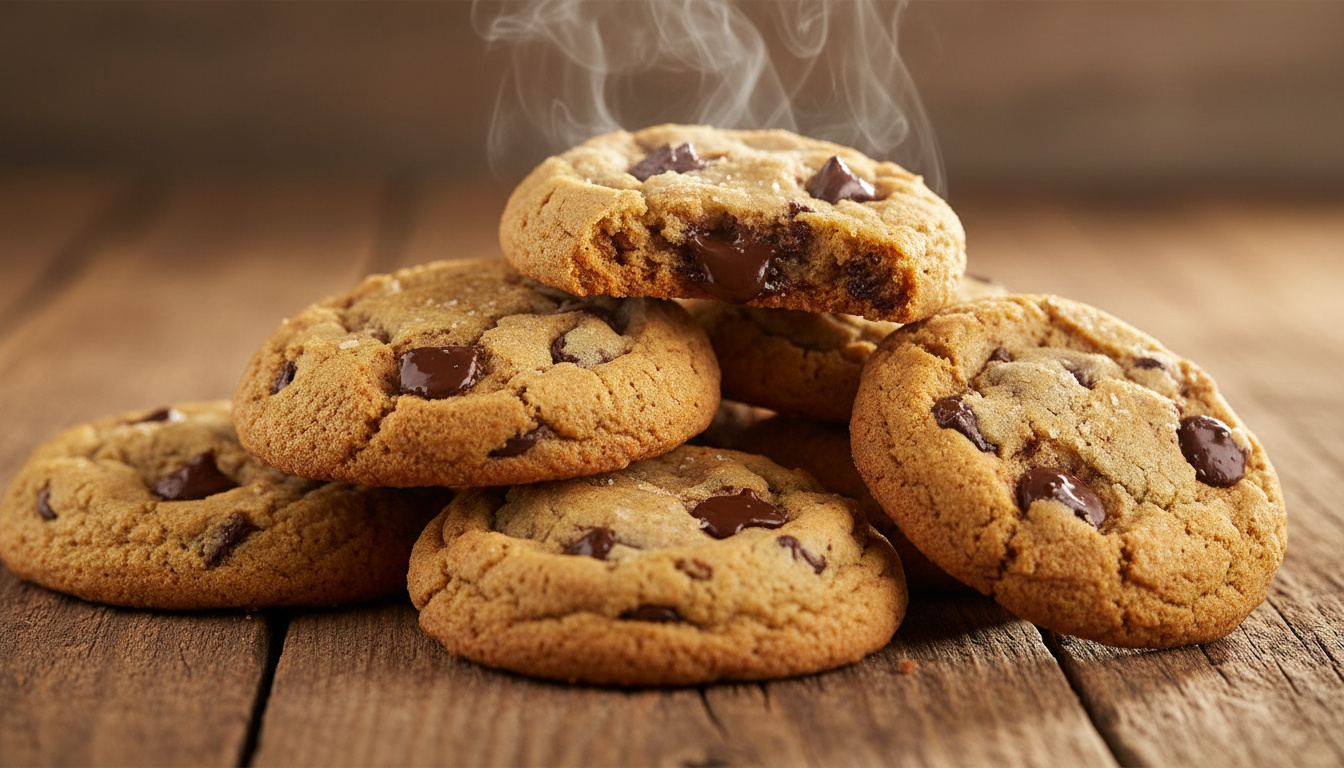
Achieving the perfect chewy chocolate chip cookie requires understanding the precise interaction between ingredients and technique. While many home bakers struggle with cookies that turn out crispy or cakey rather than soft and dense, the solution lies in specific moisture-retention strategies and controlled baking chemistry.
Melted butter serves as the foundation for texture, fundamentally altering the dough’s structure compared to traditional creaming methods. The addition of specific sugars, proper chilling protocols, and restricted baking durations creates the desired elastic crumb that defines a genuinely chewy cookie.
This guide examines the scientific principles behind chewiness, identifies common preparation errors, and provides actionable modifications based on verified baking research.
How to Make Chewy Chocolate Chip Cookies
8–24 hours optimal for flavor development and thickness
14 minutes prevents over-drying versus 23–30 minutes for crispy varieties
Melted, not creamed, for softer texture foundation
Brown sugar must exceed granulated sugar for moisture retention
Key Insights:
- Melted butter produces significantly softer cookies than creamed butter, which aerates the dough
- Brown sugar should dominate the sugar content; its molasses content adds essential moisture
- Cornstarch incorporation creates ultra-soft, thick cookies by modifying gluten development
- An additional egg yolk increases richness and structural chewiness
- Restricting creaming duration to a “damp sand” texture prevents excessive air incorporation
- Baking soda exclusively promotes Maillard reactions for deeper flavor without cakiness
- Honey or corn syrup additions at one teaspoon enhance moisture retention and chew
| Ingredient | Specification | Role in Chewiness |
|---|---|---|
| Unsalted Butter | Melted state | Provides milk solids and water for softening; prevents aeration |
| Brown Sugar | Exceeds white sugar quantity | Molasses content delivers moisture; prevents excessive spreading |
| Granulated Sugar | Less than brown sugar | Drier composition; limited use to control spread |
| Cornstarch | 1–2 teaspoons | Produces ultra-soft, thick texture |
| Egg Yolk | One extra beyond whole egg | Increases fat content and richness |
| Leavening | Baking soda only | Promotes Maillard reactions for flavor without excessive rise |
| Liquid Sweetener | 1 tsp honey or corn syrup | Enhances moisture binding and chew |
| Chocolate | Dark chunks 55–70% cocoa | Higher cocoa butter content than chips improves texture |
| Chilling Time | 8–24 hours | Develops flavor and creates thicker final product |
| Mixing Method | Until damp sand texture | Prevents over-aeration that creates crispness |
What Makes Chocolate Chip Cookies Chewy?
Chewiness emerges from the specific balance between moisture retention and fat content throughout the baking process. King Arthur Baking research indicates that butter contributes both milk solids and water, which actively soften the dough matrix when properly incorporated.
The Science of Sugar Hydration
Brown sugar contains molasses and inherent moisture that fundamentally softens cookie structure, while granulated sugar remains chemically drier and promotes spreading. Sally’s Baking Addiction demonstrates that increasing brown sugar ratios—specifically substituting one cup of brown sugar for standard combinations—directly increases moisture retention.
The combination of melted butter and brown sugar creates a denser dough matrix than creamed butter with granulated sugar. This density restricts steam expansion during baking, resulting in the compact, elastic texture associated with chewiness rather than the brittle snap of crispy cookies.
Fat Structure and Protein Development
An additional egg yolk introduces extra fat and emulsifiers that bind moisture within the cookie structure. Bake School notes that this enrichment creates the characteristic richness while maintaining pliability. The yolk’s lecithin content helps trap water molecules within the crumb, preventing the rapid staling that produces hardness.
Why Aren’t My Chocolate Chip Cookies Chewy?
The most common failure point occurs during the initial creaming stage. Scientifically Sweet research confirms that overbeating butter and sugar incorporates excessive air, which expands during baking to create a crisp, light texture rather than the desired density.
The Over-Creaming Problem
When butter and sugar are creamed until fluffy, the mixture resembles frosting rather than the recommended “damp sand” consistency. This over-aeration creates a cake-like or crispy structure because the air pockets set firmly during baking. The mixture should remain relatively thick with minimal volume increase.
Mixing butter with sugar until light and fluffy—a standard technique in many recipes—actively prevents chewiness. The butter-sugar mixture must never achieve the pale, voluminous state associated with layer cakes.
Temperature and Timing Errors
Excessive baking duration represents another primary cause of texture failure. While crispy cookie varieties require 23–30 minutes, chewy cookies demand immediate removal at approximately 14 minutes to prevent moisture loss. King Arthur Baking data shows that extending baking time beyond this window extracts too much water, creating irreversible hardness.
Baking Tips for Perfect Chewy Texture
Physical dough shaping significantly impacts final cookie architecture. Sally’s Baking Addiction recommends forming tall, lumpy cylinders rather than smooth, wide spheres to achieve bakery-style thickness.
Strategic Dough Shaping
Rolling dough between fingertips into cylinder-like shapes creates vertical mass that resists spreading. Lumpy surfaces bake unevenly, creating textural variation that mimics professional bakery results. Smooth, rounded balls tend to flatten into thin discs with crispy edges. Per aconseguir la textura perfecta dels cookies de xips de xocolata masticables, descobreix els secrets de la retenció d’humitat i la química de cocció a Anettu URL ei liity aiheeseen..
Refrigeration periods between 8 and 24 hours yield optimal flavor complexity and physical thickness. While a minimum of 4 hours produces acceptable results, the full resting period allows flour hydration and sugar dissolution that fundamentally alters texture. Scientifically Sweet confirms that extended chilling creates thicker, more flavorful cookies through controlled gluten relaxation and sugar crystallization.
Chocolate Selection Standards
Dark chocolate chunks chopped from bars containing 55–70% cocoa outperform standard chips due to higher cocoa butter content. This fat melts differently than the stabilizers in commercial chips, creating pockets of softness within the cookie structure.
Step-by-Step Preparation Timeline
- Combine melted butter with sugars, mixing only until the texture resembles damp sand
- Incorporate one whole egg plus one additional yolk, plus vanilla extract
- Fold in dry ingredients including cornstarch and baking soda until just combined
- Add chopped dark chocolate chunks from high-quality bars
- Shape dough into tall, cylindrical forms rather than smooth spheres
- Refrigerate dough balls for 8–24 hours minimum
- Bake at standard temperature for exactly 14 minutes until edges set but centers remain soft
What We Know vs. What Remains Uncertain
| Established Facts | Unclear or Unverified Information |
|---|---|
| Melted butter creates softer texture than creamed butter | Specific flour protein content requirements (bread vs. all-purpose) |
| Brown sugar must exceed white sugar for moisture | Viability of no-chill methods for equivalent texture |
| Cornstarch and extra egg yolks increase chewiness | Brown butter variations and their specific effects |
| 14-minute baking time prevents over-drying | Gluten-free flour adaptations maintaining identical texture |
| 8–24 hour chilling optimizes flavor and thickness | Long-term storage techniques beyond immediate consumption |
| Over-creaming butter creates crispness | King Arthur flour-specific substitutions versus other brands |
Historical Context of Chewy Cookie Preferences
The emphasis on chewy texture represents a relatively modern evolution in home baking standards. Early twentieth-century chocolate chip cookie recipes typically prioritized cake-like or crisp textures based on available ingredients and equipment limitations.
Contemporary preferences for dense, fudgy centers emerged alongside advances in understanding Maillard reactions and moisture retention. The shift correlates with increased access to professional baking science through digital platforms, allowing home bakers to manipulate specific chemical interactions previously understood only in commercial kitchens.
Expert Sources and Verification
Research for this analysis draws from established baking science authorities including King Arthur Baking, Sally’s Baking Addiction, and specialized culinary science sites. Food Network test kitchens have independently confirmed similar parameters regarding butter states and sugar ratios.
The creaming method determines cookie texture more than flour type. Stopping the mixer when the butter-sugar mixture resembles damp sand—not fluffy frosting—separates chewy results from crispy disappointments.
— Baking Science Research, Scientifically Sweet
Summary of Key Principles
Perfect chewy chocolate chip cookies require melted butter, dominant brown sugar ratios, cornstarch addition, extra egg yolks, restricted mixing times, and abbreviated baking periods. The 14-minute baking window and 8–24 hour chilling period prove non-negotiable for optimal results. For readers interested in precise measurement tools and conversion accuracy, see Translate Japanese to English – Best Free Tools 2025 for international recipe interpretation assistance.
Frequently Asked Questions
Can I make chewy chocolate chip cookies gluten free?
Current research does not contain detailed information regarding gluten-free flour adaptations that maintain identical chewy textures. Specific protein interactions required for chewiness may not translate directly to alternative flours without additional testing.
Is bread flour better for chewy cookies than all-purpose?
While some bakers speculate that higher protein bread flour increases chewiness, the provided research does not verify specific flour type recommendations beyond general all-purpose usage.
How long do chewy cookies stay soft?
The research provided does not contain information regarding long-term storage techniques or specific timelines for maintaining softness. Storage longevity depends on container tightness and ambient humidity, though precise data remains unavailable.
Can I substitute oil for butter to maintain chewiness?
Research focuses exclusively on butter-based preparations. Oil substitutions would eliminate the milk solids and water content that contribute to the specific soft texture described in verified recipes.
Why do my cookies turn out cakey instead of chewy?
Cakey textures typically result from over-creaming butter and sugar, creating aeration similar to cake batters. Using baking powder instead of baking soda, or incorporating too much egg white, also produces cake-like structures rather than dense chewiness.
What is the best chocolate to use for texture?
Dark chocolate chunks chopped from bars containing 55–70% cocoa provide superior texture compared to commercial chips. These chunks contain higher cocoa butter content that melts into the dough, creating softer pockets. Specific brand recommendations require Translate Japanese to English – Best Tools and Accuracy Guide for importing international chocolate varieties.
Related stories





Grace Patterson leads fact-checking, source verification and corrections review at Canada Edition.