Few political exiles ended as violently as Leon Trotsky’s final chapter in Mexico City. One moment he was a revolutionary who helped topple an empire; the next, he was a man living behind fortified walls, hunted by the regime he once helped build. This article traces his journey from architect of the Red Army to Stalin’s most wanted target, and examines what his assassination reveals about the mechanics of absolute power.
Born: 7 November 1879 ·
Died: 21 August 1940 ·
Age at death: 60 ·
Key role: Russian Revolution ·
Exile duration: 1929–1940 ·
Assassin: Ramón Mercader
Quick snapshot
- Born Lev Davidovich Bronstein on 7 November 1879 in Yanovka, Ukraine (Encyclopaedia Britannica – reference summary)
- Led the Bolshevik seizure of power in 1917 and founded the Red Army (Encyclopaedia Britannica – reference summary)
- Assassinated on 21 August 1940 in Coyoacán, Mexico, by Ramón Mercader (Encyclopaedia Britannica – assassination account)
- Exact last words – multiple versions exist, including “I am ready” (Encyclopaedia Britannica – assassination account)
- Full nature of his relationship with artist Frida Kahlo during his Mexico exile (Encyclopaedia Britannica – assassination account)
- Precise degree of his strategic involvement in the early 1905 Revolution planning (Encyclopaedia Britannica – assassination account)
- 1929 – Exiled from USSR; 1936 – granted asylum in Mexico (Encyclopaedia Britannica – reference summary)
- May 1940 – Survived a machine-gun raid on his compound (Encyclopaedia Britannica – role in Soviet government)
- 20 August 1940 – Struck with an ice axe; died the next day (Encyclopaedia Britannica – assassination account)
- Trotskyist movements continue globally, particularly in Latin America and Europe
- Historical reassessments increasingly compare Trotsky’s internationalism with Stalin’s nationalism
- His writings, especially The Revolution Betrayed, remain foundational in leftist theory
| Attribute | Detail |
|---|---|
| Full name | Lev Davidovich Bronstein |
| Born | 7 November 1879, Yanovka, Ukraine (Russian Empire) |
| Died | 21 August 1940, Mexico City, Mexico |
| Spouse | Natalia Sedova |
| Known for | Bolshevik leader, founder of the Red Army, theorist of permanent revolution |
Who assassinated Leon Trotsky and why?
The assassin: Ramón Mercader
- Ramón Mercader was a Spanish communist who had infiltrated Trotsky’s household under the alias Jacques Mornard (Encyclopaedia Britannica – assassination account).
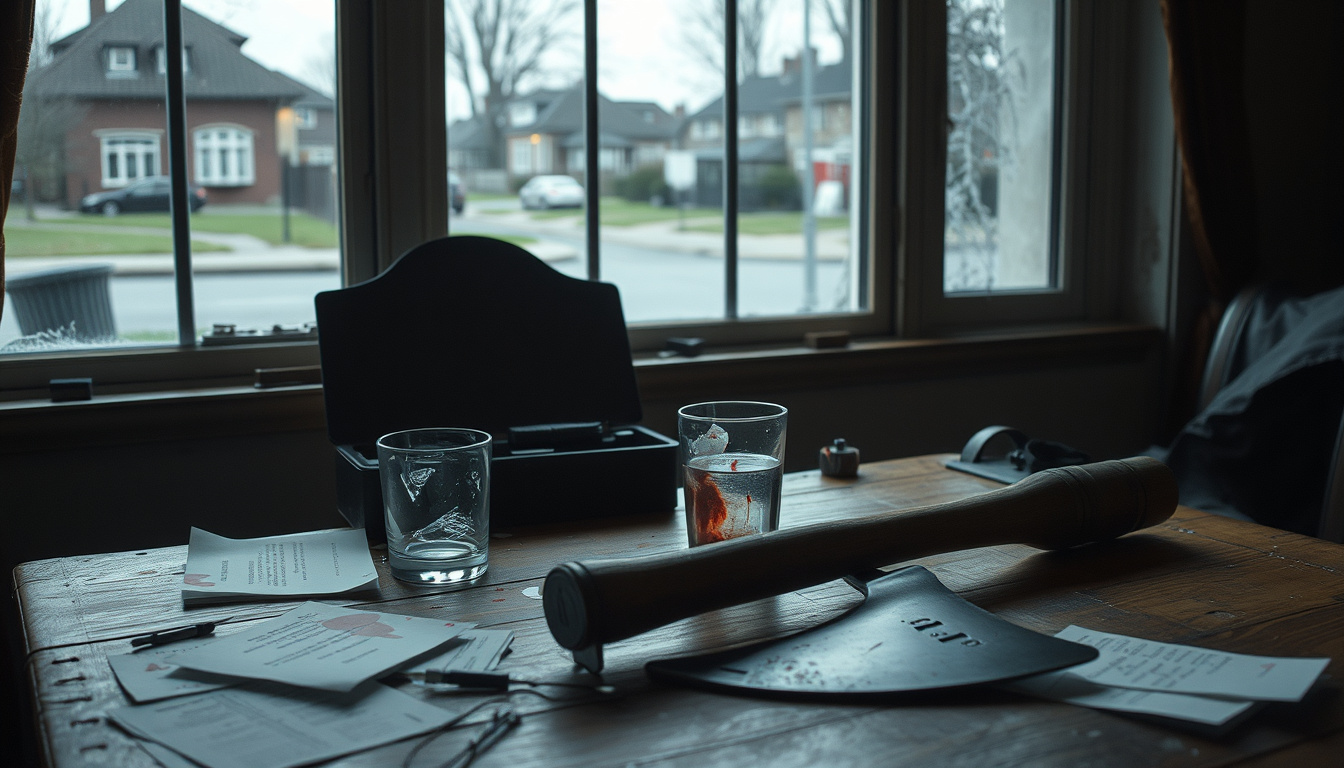
- He struck Trotsky on the skull with an ice axe on 20 August 1940 in the study of Trotsky’s Coyoacán compound (Encyclopaedia Britannica – assassination account).
- Mercader had gained the confidence of the household over several months, visiting regularly to discuss political articles (Hoover Institution – research on Trotsky in exile).
Mercader wasn’t a lone fanatic; he was the product of a meticulous NKVD operation. For readers tracking how authoritarian regimes eliminate dissent, the pattern is stark: Stalin invested years and multiple cross-border resources to silence one man.
Stalin’s order
- Mercader served under the direct instruction of Joseph Stalin’s intelligence apparatus (Encyclopaedia Britannica – reference summary).
- The assassination came after a failed machine-gun raid on Trotsky’s compound in May 1940 (Encyclopaedia Britannica – role in Soviet government).
- Stalin viewed Trotsky as the ideological head of an alternative communist movement that threatened his control over the Soviet Union and international communism (Encyclopaedia Britannica – Trotskyism definition).
Why the assassination? – ideological conflict
- Trotsky had publicly denounced Stalin’s “bureaucratic degeneration” of the revolution in works like The Revolution Betrayed (EBSCO Research Starters – academic research profile).
- His theory of “permanent revolution” directly opposed Stalin’s policy of “socialism in one country” (Encyclopaedia Britannica – Trotskyism definition).
- Stalin could not tolerate Trotsky acting as a living alternative centre of Marxist authority – his survival alone challenged Stalin’s ideological monopoly.
What was Leon Trotsky famous for?
Role in the October Revolution
- Trotsky organized the Bolshevik seizure of power in Petrograd in November 1917 (October by the Russian calendar) (Encyclopaedia Britannica – reference summary).
- As Chairman of the Petrograd Soviet’s Military Revolutionary Committee, he directed the armed takeover of government buildings and the Winter Palace.
Founding of the Red Army
- Trotsky was appointed People’s Commissar for War and built the Red Army from scratch during the Russian Civil War of 1918–1920 (Encyclopaedia Britannica – reference summary).
- He used former Tsarist officers conscripted under political commissars – a controversial move that proved effective (Encyclopaedia Britannica – video Q&A on Trotsky).
- His armoured train became a mobile command centre, moving from front to front during the civil war.
Theory of permanent revolution
- Trotsky argued that in economically backward countries like Russia, the bourgeois-democratic revolution could not succeed without being immediately transformed into a socialist revolution (Encyclopaedia Britannica – Trotskyism definition).
- This theory became the doctrinal basis for Trotskyism as a distinct school of Marxist thought (Encyclopaedia Britannica – Trotskyism definition).
Trotsky’s theory was internationalist and revolutionary – but it demanded constant upheaval. Stalin’s rival theory, “socialism in one country,” promised stability first. For a war-weary population, that settled the debate long before the ice axe.
The pattern: Trotsky was the strategist of revolution, not the bureaucrat of consolidation. His genius for taking power was matched by his inability to hold it against a patient, institutional foe.
What happened between Stalin and Trotsky?
Rivalry after Lenin’s death
- Vladimir Lenin died on 21 January 1924, triggering a succession struggle within the Communist Party (Encyclopaedia Britannica – who was Trotsky Q&A).
- Lenin had described Trotsky as “the best man in the party” in 1918, but his Testament warned against both Trotsky’s administrative overconfidence and Stalin’s rudeness.
- Stalin, as General Secretary, controlled party appointments and used his position to build a loyal faction.
Stalin’s consolidation of power
- Stalin methodically isolated Trotsky, forming a “troika” with Grigory Zinoviev and Lev Kamenev to outvote him on the Politburo (Encyclopaedia Britannica – reference summary).
- Trotsky was expelled from the Politburo in 1926 and from the Central Committee in 1927 (Encyclopaedia Britannica – reference summary).
- The 1927 Fifteenth Party Congress declared Trotsky’s views a “petty-bourgeois deviation,” formalizing his defeat.
Trotsky’s expulsion and exile
- Trotsky was internally exiled to Alma-Ata (now Almaty, Kazakhstan) in January 1928 (Encyclopaedia Britannica – role in Soviet government).
- He was expelled from the Soviet Union to Turkey in February 1929, accompanied by his wife Natalia Sedova and their eldest son Lev (Wikipedia – Leon Trotsky biography).
- After periods in Turkey, France, and Norway – where Stalin’s diplomatic pressure made his position untenable – he eventually secured asylum in Mexico in 1936 (Encyclopaedia Britannica – reference summary).
Why this matters: The Stalin–Trotsky rivalry wasn’t a clash of equals. Stalin played the long bureaucratic game; Trotsky gambled on mass mobilisation and lost. Every step of Trotsky’s exile was a victory for the machine over the orator.
Was Trotsky considered good or bad?
Supporters’ view – revolutionary hero
- Marxist and anti-Stalinist leftists admire Trotsky for his internationalism and his critique of Soviet bureaucracy as a “degenerated workers’ state” (Encyclopaedia Britannica – Trotskyism definition).
- His exile and assassination turned him into a martyr figure among Western leftists (Hoover Institution – research on Trotsky in exile).
- Trotskyist parties and Fourth International sympathizers continue to operate in dozens of countries, especially in Latin America and Europe.
Critics’ view – extremist and divisive
- Trotsky employed authoritarian methods during the civil war, including the execution of deserters and the suppression of the Kronstadt rebellion in 1921.
- His insistence on world revolution alienated moderates within the Bolshevik party and frightened Western governments (Encyclopaedia Britannica – reference summary).
- Many historians argue that Trotsky’s own uncompromising style contributed to his political isolation – he made enemies faster than allies.
Historical reassessment
- Modern scholarship increasingly distinguishes between Stalin’s crimes and Trotsky’s record, though the division remains contested.
- Two facts are generally accepted: Trotsky was a brilliant revolutionary organizer, but he was also complicit in the early repression that Stalin later perfected.
- His legacy remains deeply polarized – no neutral ground exists in the history of the Russian opposition.
Trotsky was both a victim of Stalin’s terror and a co-creator of the system that made that terror possible. For readers trying to evaluate his legacy, the honest answer is: he was both liberator and authoritarian, depending on which period and which country you measure.
Upsides
- Brilliant military strategist who saved the Bolshevik revolution during the civil war
- Early critic of Stalin’s bureaucratic authoritarianism
- Developed influential Marxist theories (permanent revolution, combined development)
- Defended international working-class solidarity against nationalist communism
Downsides
- Employed terror and executions during the civil war
- Uncompromising political style led to self-isolation
- Author of the Kronstadt repression
- Legacy co-opted by sectarian groups with limited mass appeal
What were Trotsky’s last words?
The attack with an ice axe
- On 20 August 1940, Ramón Mercader visited Trotsky’s compound in Coyoacán carrying an ice axe hidden in his coat (Encyclopaedia Britannica – assassination account).
- As Trotsky read an article Mercader had brought for review, Mercader struck him on the back of the skull, fracturing his cranium (Encyclopaedia Britannica – assassination account).
- Trotsky did not die instantly but lived for nearly 26 hours, undergoing surgery at a local hospital.
Trotsky’s final statement
- According to his wife Natalia Sedova and attending physician, Trotsky was conscious for a period after the attack and reportedly said “I am ready” when asked if he wanted further medical intervention (Encyclopaedia Britannica – assassination account).
- Other accounts claim he told Mercader, “You are a fascist,” or that he spoke about the need to continue the revolutionary struggle.
- The version ending with “I am ready” has become the most widely repeated, though it is not definitively proven.
Aftermath
- Trotsky died on 21 August 1940 at age 60 (Encyclopaedia Britannica – assassination account).
- Mercader was captured immediately, sentenced to 20 years in a Mexican prison, and later moved to the Soviet Union where he was awarded the Hero of the Soviet Union medal (Hoover Institution – research on Trotsky in exile).
- Trotsky’s body was cremated and buried in the garden of his Coyoacán home, which is now the Leon Trotsky Museum.
What this means: The final words, regardless of which version you accept, reflect a man who had already processed his death. Trotsky knew he was hunted; the only question was when the blow would land. That it came from a trusted visitor, in his own study, gives the story a Shakespearean completeness – the revolutionary killed by the weapon of trust itself.
Timeline of Trotsky’s life and death
- 1879 – Born in Yanovka, Ukraine (Encyclopaedia Britannica – reference summary)
- 1905 – Led the 1905 Revolution: first mass uprising against Tsar Nicholas II
- 1917 – October Revolution: seized power with Lenin and organized Bolshevik takeover (Encyclopaedia Britannica – reference summary)
- 1918–1920 – Civil War: commanded the Red Army to victory (Encyclopaedia Britannica – video Q&A on Trotsky)
- 1924 – Lenin dies; power struggle with Stalin begins (Encyclopaedia Britannica – who was Trotsky Q&A)
- 1927 – Expelled from the Communist Party (Encyclopaedia Britannica – reference summary)
- 1929 – Exiled from the Soviet Union to Turkey (Wikipedia – Leon Trotsky biography)
- 1936 – Granted asylum in Mexico, settles in Coyoacán (Encyclopaedia Britannica – assassination account)
- May 1940 – Survives machine-gun assassination attempt (Encyclopaedia Britannica – role in Soviet government)
- 20 August 1940 – Attacked by Ramón Mercader with ice axe (Encyclopaedia Britannica – assassination account)
- 21 August 1940 – Dies from injuries at age 60 (Encyclopaedia Britannica – assassination account)
Five dimensions reveal a clear divide: Trotsky was the theorist of permanent revolution; Stalin was the architect of bureaucratic control.
| Dimension | Leon Trotsky | Joseph Stalin |
|---|---|---|
| Ideology | Permanent revolution – global working-class revolution | Socialism in one country – national consolidation first |
| Military role | Founder and commander of the Red Army | Political commissar during civil war; limited field command |
| Oratorical skill | Renowned speaker and writer; attracted intellectuals | Dry, pragmatic speaker; built coalitions through appointments |
| Leadership style | Charismatic, confrontational, inspiring | Bureaucratic, patient, ruthless |
| Fate | Assassinated in exile; posthumous ideological influence | Died in power; posthumous condemnation at 20th Party Congress (1956) |
Key quotes on Trotsky
I am ready.
– Leon Trotsky, reported last words after the ice axe attack, 20 August 1940 (Encyclopaedia Britannica – assassination account)
Comrade Trotsky is the best man in the party.
– Vladimir Lenin, describing Trotsky in 1918 (Encyclopaedia Britannica – who was Trotsky Q&A)
britannica.com, britannica.com, britannica.com, podcasts.apple.com, dlab.epfl.ch, marxists.org, oac.cdlib.org
For a detailed account of his life and death, see Leon Trotskys biography and assassination.
Frequently asked questions
How did Leon Trotsky die?
He was assassinated by Ramón Mercader, a Spanish communist agent acting under Stalin’s orders, who struck him in the skull with an ice axe on 20 August 1940 at his home in Coyoacán, Mexico. Trotsky died the following day (Encyclopaedia Britannica – assassination account).
What is Trotskyism?
Trotskyism is a Marxist current founded on Leon Trotsky’s theory of permanent revolution, which argues that in less-developed countries, the working class must take leadership in democratic revolutions and immediately proceed to socialist measures. It opposes Stalin’s “socialism in one country” (Encyclopaedia Britannica – Trotskyism definition).
Why did Trotsky go to Mexico?
After being expelled from the Soviet Union in 1929, Trotsky lived in Turkey, France, and Norway. Stalin’s diplomatic pressure forced him out of Norway, and Mexican President Lázaro Cárdenas offered him asylum in 1936 (Encyclopaedia Britannica – reference summary).
Did Trotsky have children?
Yes, he had two sons with his first wife Alexandra Sokolovskaya (Zina and Lev), and two sons with his second wife Natalia Sedova (Lev and Sergei). Zina and Lev (the elder) predeceased him; Sergei died in the Gulag (Wikipedia – Leon Trotsky biography).
What books did Leon Trotsky write?
Major works include My Life (autobiography), The Revolution Betrayed (1936 critique of Stalin’s USSR), History of the Russian Revolution (1932), and Literature and Revolution (1924). His collected writings span over 40 volumes (EBSCO Research Starters – academic research profile).
Was Leon Trotsky a communist?
Yes. He was a Marxist revolutionary and a founding leader of the Soviet state. After his expulsion from the Communist Party of the Soviet Union in 1927, he founded the Fourth International in 1938 as an alternative international communist organization (Encyclopaedia Britannica – Trotskyism definition).
What was Trotsky’s relationship with Lenin?
They were close collaborators during the 1917 Revolution and civil war. Lenin once called Trotsky “the best man in the party,” but their relationship was strained by tactical disagreements. Lenin’s Testament criticized both Trotsky’s administrative overconfidence and Stalin’s rudeness (Encyclopaedia Britannica – who was Trotsky Q&A).
Where is Trotsky buried?
His ashes are interred in the garden of his former home in Coyoacán, Mexico City, which now operates as the Leon Trotsky Museum. The grave is marked by a simple stone monument (Encyclopaedia Britannica – assassination account).
Related reading: Kim Jong Un: Biography, Family, Politics, and Key Facts · Carl Sagan: Life, Achievements, Quotes, Religion, and Legacy
Related stories




Ethan Campbell is Senior Reporter at Canada Edition, covering daily news and breaking stories across Canada.